The Summer Hydration Secret
How To Make the Five-Cent Sports Drink for Range or Ruck
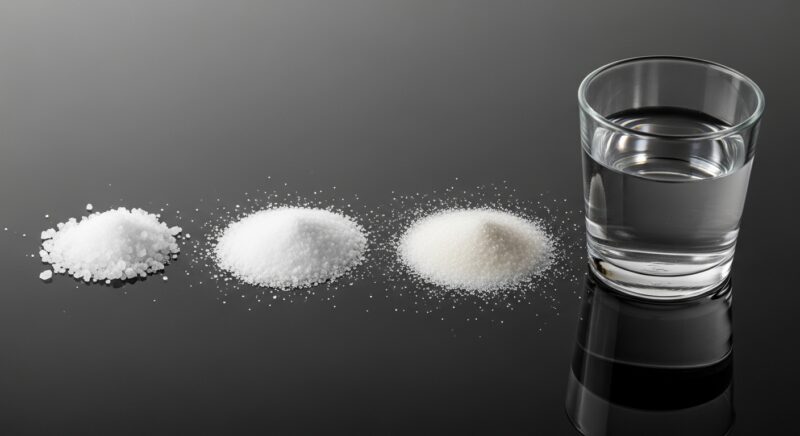
The best way to stay at peak performance when it’s hot outside is by using
three ingredients you probably already have in your pantry.
Summer in the central United States can be downright miserable. I’ll admit it’s not quite the same as the Deep South, where the humidity is so oppressive even nuns sometimes curse openly, but we’re close enough. Unless you’re fortunate enough to spend your summers in the rainforests of the Pacific Northwest, the season eventually becomes a contest between your air conditioner and the laws of thermodynamics.
Discomfort, however, is only part of the problem. For years, the standard advice for people working hard in hot conditions was simple: drink more water. That’s good advice as far as it goes, but the trouble is that sweat contains more than water.

Maintaining hydration is only something athletes need to worry about?
Anyone working or playing outdoors and losing copious amounts of sweat
need to be concerned about replacing both water and minerals, especially salt.
Sweating it Out
When you’re spending hours outdoors — whether that’s on a shooting range, behind a lawn mower, on a construction site or carrying a 30-pound backpack over a series of ridges — heat can become a genuine safety issue. Having spent countless summer days on ranges across the country (Gunsite Academy in August, anyone?), I learned long ago to respect dehydration. What took me longer to understand was that water is only part of the equation. The other part is mineral balance.
Over the years, I’ve used my share of brightly colored sports drinks, electrolyte packets, hydration multipliers, recovery formulas and various other magical elixirs marketed as the ultimate answer to heat, sweat, fatigue and human frailty. Most seemed to help at least a little, while some worked remarkably well. But I’ve never been entirely comfortable accepting marketing claims as scientific fact, especially when those claims involve proprietary blends, trademarked ingredients and enough buzzwords to fill a pharmaceutical encyclopedia.
Recently, I decided to take a deeper look at hydration and electrolyte replacement because I wanted to understand the actual science rather than the marketing copy. Specifically, I wanted to know which ingredients truly mattered, which ones were merely helpful and which existed primarily because nobody ever sold a premium product by advertising a mix of water, salt, and common sense.
What I found was eye-opening.
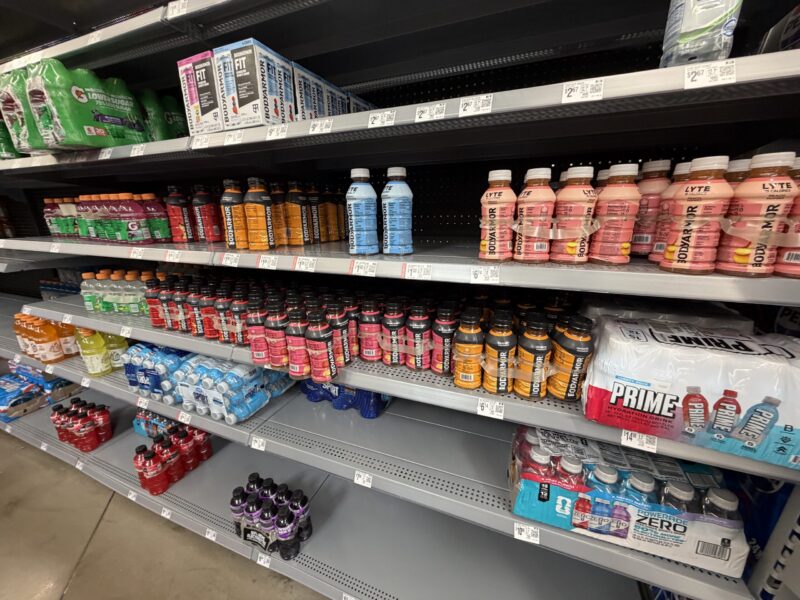
You think hydration isn’t big business? “Sports drinks” are a 6.7 billion dollar industry
built on the promise all sorts of benefits from their long lists of ingredients.
However, science suggests a simpler approach is arguably better.
Big Hydration
Hydration has become serious business. Walk through any store selling drinks, and you’ll find shelves lined with brightly colored powders and bottles promising rapid hydration, enhanced recovery, improved performance, cellular absorption, trace minerals, vitamins and antioxidants with enough proprietary ingredients to make a chemistry professor reach for his reading glasses. Despite all the claims, every product relied on the same basic ingredient — salt.
Not artisanal magnesium harvested from a remote mountain range, nor vitamins or a “proprietary hydration matrix developed by our scientists.” Just plain old salt, also known chemically as sodium chloride.
Shockingly, I actually learned something in college biology class: sodium is the primary electrolyte lost through sweat. Potassium and other minerals matter, but sodium is the big one. It wasn’t until years later that I saw this concept in action.

Brent learned the importance of electrolyte replacement years ago after a hiking partner fell out.
They had been “pounding” water all day during a hot-weather hike but hadn’t been replacing
the minerals lost in their sweat. The result? Profound fatigue and nausea, which quickly
diminished after drinking an electrolyte solution.
One of my hiking partners often reached a point where he simply ran out of gas. He’d sit (or sometimes lie) down on the trail looking like someone unplugged him from the wall. One time, this happened, I tossed him a sports drink mix packet on the chance it might help. After drinking a quart of the mix, he quickly revived and finished the day without problems. Electrolytes aren’t magic, and they don’t fix every problem, but more often than not, they seem to help when you’re dragging in hot weather.
Now, the necessary disclaimer: not every case of fatigue is caused by an electrolyte imbalance. Actual heat exhaustion or heat stroke, dehydration, lack of sleep, poor nutrition, and several medical conditions can produce or combine to produce similar symptoms. Also, folks with kidney problems, high blood pressure or other serious medical conditions should consult a healthcare professional before loading up on a salty beverage. However, most healthy people can tolerate reasonable amounts of sodium if they’re simply replacing their losses.
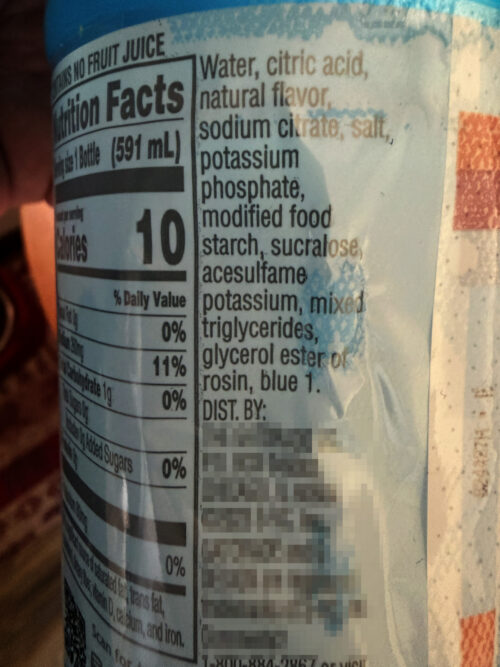
Need proof that sports drinks are focused on hype and flavor instead
of effectiveness? This label from one of the most popular sports drinks
shows it contains flavoring as the first two ingredients besides water.
Do you think this was intentional to cater to consumer tastes?
The Hype Factory
Here’s where things get interesting. Most hydration advertising focuses on what has been added: vitamin B, vitamin C, magnesium, antioxidants, trace minerals, adaptogens and various ingredients whose names sound like they were generated by a marketing committee — and probably were. The message is always the same: More ingredients equal better hydration, i.e., “Now with extra selenium, molybdenum and castoreum!” The actual science is far less exciting.
Many hydration products lean heavily on added vitamins, particularly the B vitamins often associated with “energy.” The implication is easy to understand: more vitamins must mean more energy. Unfortunately, human physiology doesn’t work that way. If you’re deficient in a vitamin, correcting the deficiency can indeed have a dramatic effect.
However, if you’re already getting enough, additional amounts usually provide little benefit. Think of it like motor oil in a pickup truck: too little oil can ruin an engine but once the crankcase is full, adding more doesn’t help. Add far too much and you’ve created a different problem.
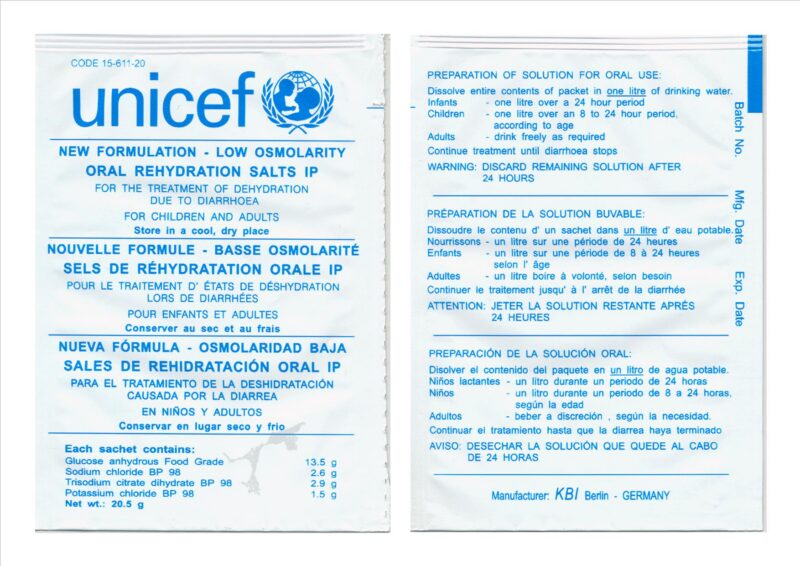
Oral rehydration solution (ORS) mix has literally saved millions of people across the globe from dehydration
caused by diarrhea and other illnesses. Notice the ingredient list: salt, potassium and sugar. Photo: CC by Wikipedia
One of the most important medical rehydration formulas ever developed, “Oral Rehydration Solution,” contains three basic ingredients: water, salt, and sugar. Millions of lives have been saved worldwide based on that simple combination.
This solution includes sugar because research has found the human body absorbs water and sodium much more efficiently when glucose (sugar) is present. The formula works because it matches human physiology, not because it sounds impressive on a label.
This may explain one of the more surprising things I learned during my research. Many commercial sports drinks contain less sodium than what many hikers, athletes and outdoor workers actually lose. This sounds ridiculous until you realize companies don’t formulate products solely for performance — they formulate them for customers. Not surprisingly, customers, especially those who aren’t really dehydrated, generally prefer drinks that taste good.
A truly sodium-rich drink tastes salty, and many people don’t like that. The commercial result is a marketing compromise between hydration science and consumer preference. The best-selling hydration drinks don’t necessarily work best; they simply strike the most appealing balance between hydration, flavor, and marketing!
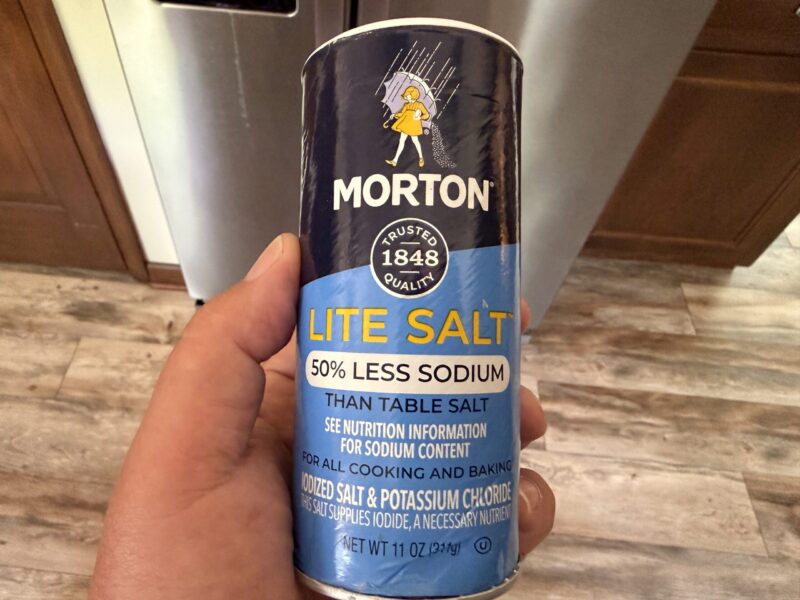
“Lite” salt, in this case packaged by Morton, is a common household seasoning
that provides potassium to the DIY hydration mix.
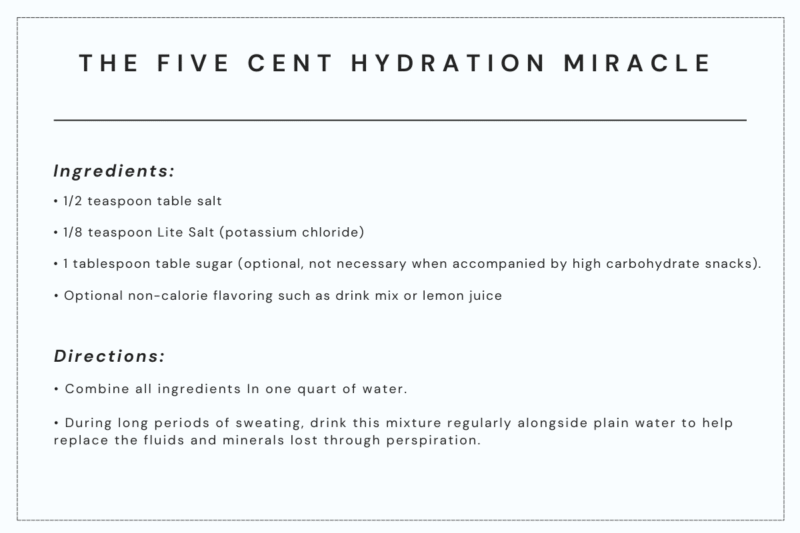
After reading about oral rehydration solutions, electrolyte replacement and the science behind it, I decided to try a homemade version I’ve seen recommended many places. The recipe is simple: one quart of water, one-half teaspoon of table salt, one-eighth teaspoon of Lite Salt, and one tablespoon of sugar. Flavoring is optional; artificial color is absurd.
The sugar is also optional because if you’re eating carbohydrate-laden snacks like trail mix while drinking this hydration “beverage,” you’re already ingesting enough sugar from the food, so the added sugar in the mix becomes less important. If you’re only drinking this solution and consuming nothing else (like during breaks in your shooting class), adding sugar greases the on-ramp so you can get more of the important stuff out of your gut and into your body.
But how does it taste?
Down the Hatch
My first impression was that this recipe would never threaten the sports drink military-industrial complex.
Nobody is going to mistake it for a bottle of SuperDuperAde, (“Now with 100% more Rubidium and Tahitian swordfish extract!”). It tastes slightly salty because, well, it’s just salt water. It’s not terrible, but it certainly isn’t something you’d casually drink while watching television. It is, however, surprisingly effective. On hot hikes and long days outdoors, I found myself feeling better and recovering faster than when I relied exclusively on plain water or even a bottle of the bright blue stuff.
For taste, I add a small packet of non-calorie pink lemonade drink mix. It makes the solution more palatable, but don’t expect miracles — this is to keep you going forward, not provide a delightful liquid accompaniment to chocolate-dipped strawberries and light poetry al fresco.
Was it a controlled scientific study? Not even close. It was one guy with a water bottle, some hot weather and a willingness to experiment. Still, the results were convincing enough that I’ve continued using it.
For folks spending all day on a range, hiking trail, farm or construction site, the answer to rehydration doesn’t require a list of 42 trace minerals and vitamins. It just needs the ingredient we’ve known about all along: salt.
It’s not glamorous, trendy or expensive, but it is effective — and very, very cheap!
I suppose if you need glamorous and trendy, just tell everyone you’re drinking “a bespoke, proprietary solution of salinated dihydrogen monoxide with an added sucrose/fructose blend.” People will probably throw money at you to share the rest of your bottle.
Only you will know it’s one of the cheapest and most practical hydration solutions available, and it’s been sitting in your kitchen cabinet all along.
Want more online exclusives from GUNS delivered straight to your inbox? Sign up for our FREE weekly email newsletters.
Photo credit: Photo illustrations 1 & 2 developed using artificial intelligence, all other photos by author.