Permethrin: The “Chemical Weapon”
Every Shooter Should Consider
Less distraction, more time on target

Most shooters haven’t heard of permethrin but would greatly benefit from its unique ability
to fend off or even kill ticks, mosquitoes and chiggers.
Spend enough time shooting prone during summer, and you discover an uncomfortable truth: the local tick population appreciates precision rifles as much as you do.
Modern rifle culture increasingly pushes shooters off concrete benches and into the field. Whether it’s practical rifle competition, NRL Hunter matches, prairie dog towns, field-position practice or simply stretching out behind a bipod on a rural range to put rounds downrange, more shooters are spending hours belly-down in grass, weeds and brush.
Unfortunately, ticks, chiggers and mosquitoes enjoy those same environments every bit as much.
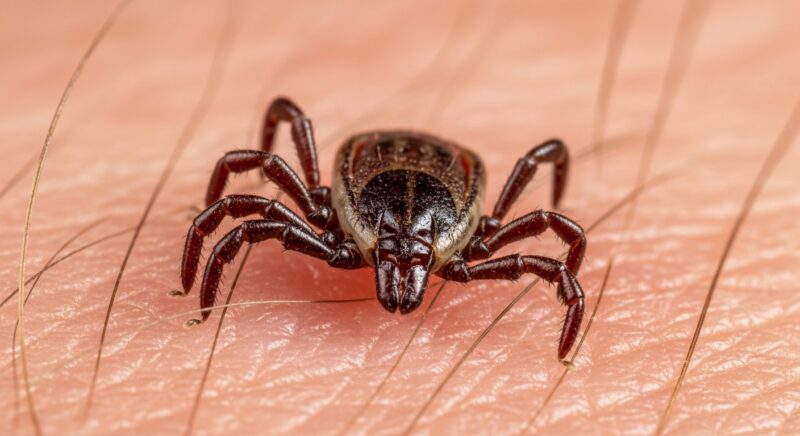
The main nemesis of shooters and active outdoors enthusiasts: the tick.
Ticks are becoming more prevalent across the U.S. and carry an increasing
variety of diseases, including the bizarre “Red Meat Allergy” disease.
Required Gear
Most shooters obsess over optics, ballistic computers and gear selection while largely ignoring one of the simplest upgrades available for summer shooting comfort: treating clothing and equipment with permethrin.
If the name sounds vaguely familiar, there’s a reason. Permethrin has been around for years and has long been used by military personnel, backpackers, hunters and serious outdoors enthusiasts. Yet many casual shooters either haven’t heard of it or misunderstand what it actually does.
Unlike DEET or picaridin, which are applied to exposed skin, permethrin is designed exclusively for clothing and gear. Once applied and dried, the treatment bonds to fabric and helps repel or kill ticks, mosquitoes and other insects on contact.
In practical terms, it means your pants, socks, boots and shooting mat become far less hospitable to things with too many legs. This matters more than you might realize.
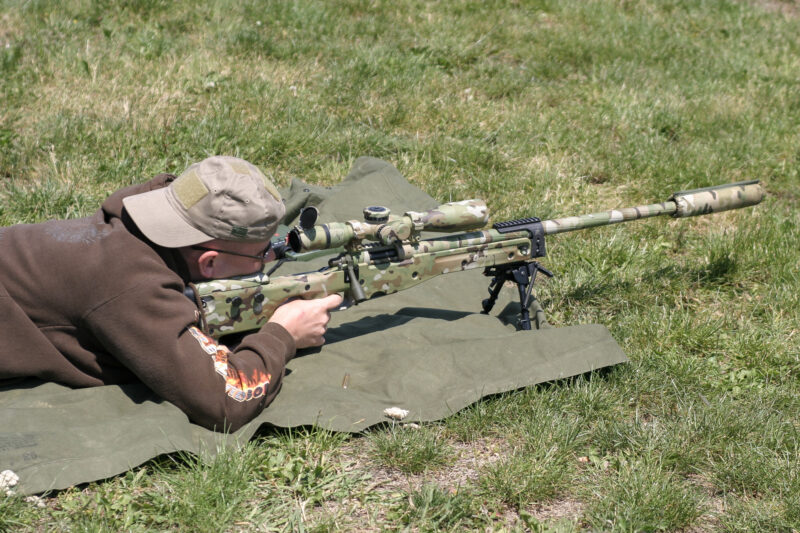
Shooters, especially those who spend time shooting prone — even on short, manicured range grass —
need the benefits of Permethrin to ward off ticks and other disease-carrying insects.
As I can attest, a prone rifle shooter is essentially a stationary buffet for bloodsucking parasites. While a hiker keeps moving and a fisherman can casually swat bugs away, shooters often remain motionless for extended periods. Anyone trying to break a clean shot at distance knows the annoyance of a mosquito just beginning drilling operations on your neck.
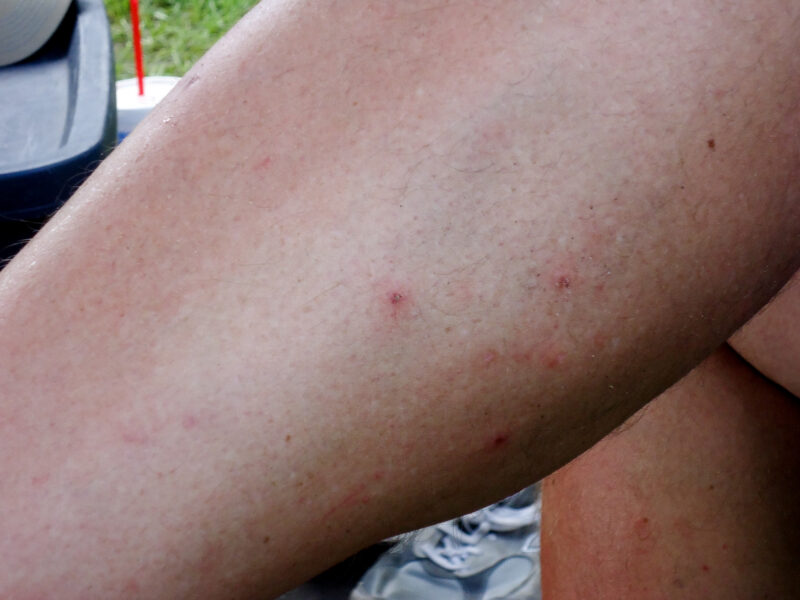
Even a mild case of chiggers is annoying, while those found in the deep South or Southwest
take infernal itching to a whole new level. Fortunately, Permethrin works wonderfully against
these pests when sprayed on socks and pant legs.
Chiggers deserve their own mention, if only because they operate on a delayed-action misery schedule. You can walk out of the field thinking you got away clean, only to discover later your waistline, sock tops — or much worse — areas higher on the body have turned into a science experiment in itching. While permethrin gets most of its attention for ticks, it’s equally useful against these demons from hell. Treated pants and socks tend to stop chiggers before they ever get established and shift the odds heavily in your favor — and with chiggers, it makes the difference between a normal day and a week of questioning your hobbies and overall life choices.
Ticks are even worse, and they are becoming far more common.
Wildlife biologists and public health officials have documented expanding tick populations across much of the United States over the last couple decades. Milder winters, changing habitat and booming deer populations have all been blamed to varying degrees, but regardless, more outdoors enthusiasts are encountering more ticks in more places than they remember from years past. And, more concerning, is what some of those ticks carry.
Most shooters have heard of Lyme disease, but ticks are also associated with Rocky Mountain spotted fever, ehrlichiosis and Alpha-gal syndrome — better known as the bizarre “red meat allergy” disease linked primarily to Lone Star tick bites. The idea that a tiny woodland parasite can potentially turn a cheeseburger into a life-threatening medical emergency sounds like something you’d normally dismiss out of hand, but it’s real.
You don’t need to panic every time you brush against tall grass, but it is hard to ignore the fact ticks have become more than a minor outdoor annoyance for those who, either for vocation or hobby, spend a lot of time on the ground in the outdoors.
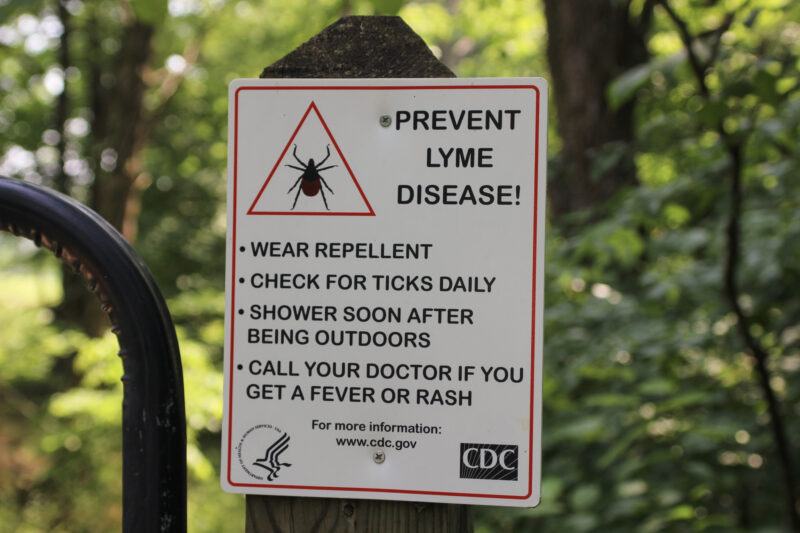
Tick-borne Lyme disease is spreading across the country and more locations have taken to warning
outdoor visitors of the danger.
Prevention is Key
Many of us are familiar with the ritual of the post-range “tick check.” Starting with your pant legs, everything gets closely inspected until you end up standing in your birthday suit in the garage or guest bathroom, wondering how a creature the size of a pepper flake can force a grown man to strip naked.
I became a permethrin believer after hiking in what I affectionately call “The National Tick Refuge,” otherwise known as Southern Indiana’s Hoosier National Forest. On more than one occasion, I looked down to see dozens of deer ticks climbing my pant legs and boots after walking through brush or tall grass. Then, something interesting happened — one by one, they suddenly lose enthusiasm for the project.
Maybe “dramatically swooning off my pants” overstates things a little, but the ticks would gain a foothold, start climbing and then abruptly fall away as if they’d dramatically underestimated the challenge.
Mosquitoes often react the same way: they land briefly, then either fall stunned or depart before attempting any drilling. These experiences, repeated many times, sold me more effectively than any marketing brochure ever could.
If you need additional proof, consider my recently concluded turkey hunting season. I hunted for two weeks like it was my job, despite a wet spring, the kind of weather that normally produces biblical insect populations. I spent long mornings sitting against trees, crawling through succulent green undergrowth and wandering damp woods. It should have resulted in a full-scale tick invasion, or at the very least, a straggler or three on my person.
Instead, the final score was “Nimrod 1, ticks 0.” (Don’t ask about the turkey score)
Permethrin doesn’t create an invisible force field. You’ll still encounter bugs because, regrettably, nature remains heavily invested in insects, and DEET is still your friend. What permethrin does is eliminate those creepy-crawling and biting critters on areas covered by your treated clothing or gear.
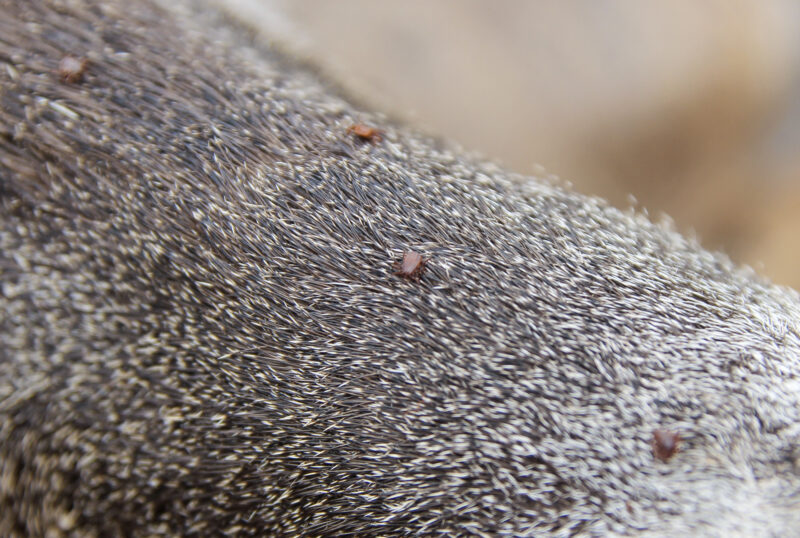
Tick populations are increasing due to warmer winters and the increase in deer numbers.
It’s not uncommon to find deer, such as this harvested Missouri whitetail, covered in ticks.
For shooters, the application points are fairly obvious. Pants and socks are probably the highest-value items because ticks and chiggers typically begin low and crawl upward. Boots, especially fabric hunting or hiking boots, also benefit substantially. Beyond clothing, many shooters treat things like shooting mats, pack straps, range bags, general outerwear and even ground blinds.
Practical rifle shooters spend entire match days moving through grass and brush. Treated clothing noticeably improves comfort and concentration, which improves the mental side of shooting. Constantly feeling bugs — real or imagined — crawling across your arms or neck is distracting when you’re trying to spot impacts, read wind or make precise shots from improvised positions.
However, the benefits of permethrin extend well beyond shooting sports into all outdoor summer activities. Mowing your acreage, scouting deer property, fishing riverbanks, setting trail cameras, hiking, camping and even the mud bog at the county fair during mosquito season all become more tolerable.
Use & Application
I have the most experience with the Sawyer brand, though several companies make similar products and even some for dogs. Several companies also now offer factory-treated clothing where the protection lasts longer than DIY sprays.
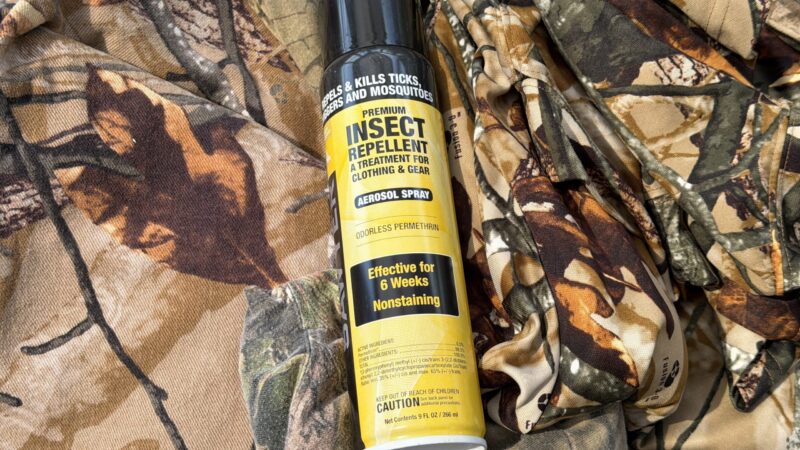
Sawyer Products makes one of the most popular lines of DIY permethrin spray.
Their products are available nationwide and online.
Product labeling can be a little confusing, so make sure you’re buying a product intended for treating clothing and gear. For example, my leftover 2-year-old can of Sawyer clothing treatment has “INSECT REPELLENT” in large letters with “A treatment for clothing and gear” in smaller typeface. This has changed in newer packages, but make sure you don’t accidentally buy an insect repellent, such as DEET, intended for skin, not clothing.
Using permethrin is straightforward: you spray your clothes or gear until they are damp with product, then allow them to dry. I always try to spray in a well-ventilated area, as I don’t want to breathe the product, even though it supposedly has a low toxicity for humans.
Once permethrin dries, you won’t be able to detect the item has been treated. At first, there is a very faint smell of dried chrysanthemums, which isn’t wholly unpleasant, but it goes away fairly quickly and isn’t really noticeable outdoors. I will say that in my experience, deer seem very attuned to the scent, which it appears they pick up at significantly farther distances.
Deer hunters will have to decide which risk is worse: scaring deer away or clawing your nether regions into hamburger due to chiggers.
The only way to verify Permethrin is still working is to watch critters crawl or land on the treated gear. If they swoon and drop, you know the treatment is still effective. If not, scream, pick the ticks off and re-treat. Supposedly, the spray will last through at least six laundering cycles, though I’ve never tested it to verify. Permethrin is so easy to apply, I just give my outdoor clothing a new application at the first of every month or so during warm weather and call it a day.
Safety
Though permethrin is considered generally safe when used as directed, a few common-sense precautions apply. Permethrin products intended for fabric should not be applied directly to skin, and clothing must be allowed to dry completely before wear. I never apply it to the inside of clothing which has direct skin contact, but that’s just me being overly cautious.
There is scientific evidence permethrin is absorbed through the skin and is potentially an endocrine disruptor. However, I consider that risk minor compared to the danger of disease from tick bites. Wet permethrin is also highly toxic to cats, so pet owners should use caution during application and drying.
All that said, once dry and properly used, permethrin-treated clothing is the gold standard for serious outdoors enthusiasts for one simple reason: it works.
The funny part is how little attention it receives in the shooting world compared to far more expensive and less useful shooting accessories. Shooters will endlessly debate the B/C of a given 6.5 Creedmoor bullet online for three weeks straight, then spend an entire afternoon donating blood to mosquitoes because they never treated their pants and shooting shirt.
Permethrin isn’t glamorous. Nobody posts dramatic social media photos of treated socks. There’s no carbon-fiber version with M-LOK slots and a patriotic logo laser-engraved on the side, but for shooters who spend serious time outdoors during warm weather, it may be one of the cheapest and most practical quality-of-life upgrades available.
Want more online exclusives from GUNS delivered straight to your inbox? Sign up for our FREE weekly email newsletters.