FireStick: From Controversy
to Acceptance
How a little polymer tube quietly changed the muzzleloader industry
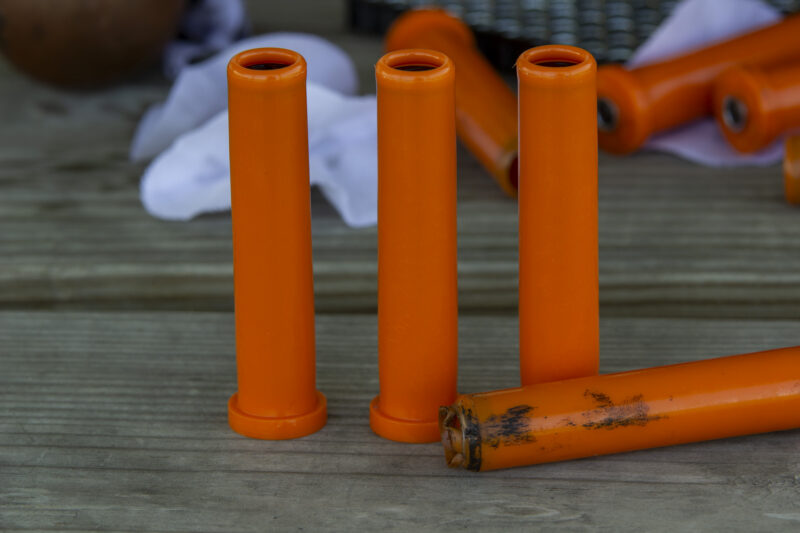
The FireStick from Federal Ammunition is a sealed propellant charge designed for inline muzzleloaders.
It offers several advantages over loose powder but it wasn’t without controversy when first introduced.
Six years ago, mentioning the word “FireStick” around a group of muzzleloader hunters was a good way to start a fistfight. To some, it represented the future of black powder hunting; to others, it was little more than a centerfire cartridge masquerading as a muzzleloader. Internet forums lit up with dire predictions that it would destroy traditional muzzleloader seasons, undermine primitive weapon regulations and erase centuries of hunting heritage.
A funny thing happened on the way to the apocalypse: none of that came to pass.
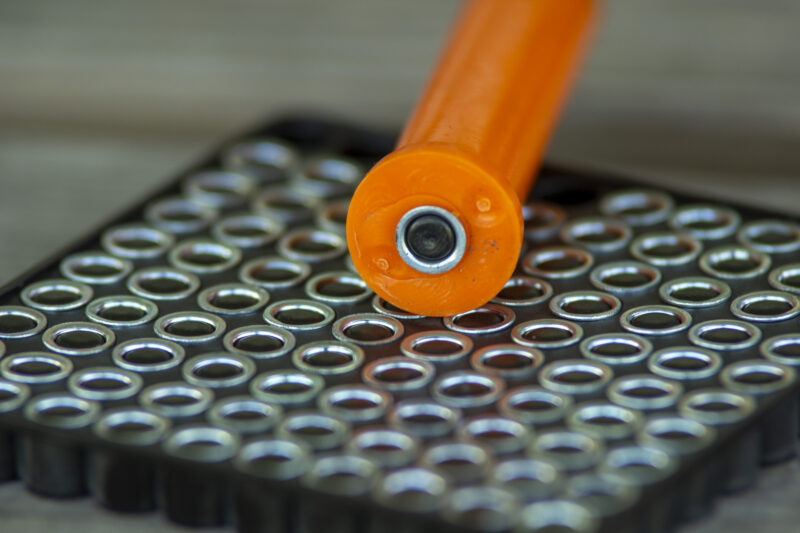
he FireStick uses a common 209 primer—usually used in shotgun shells—as the ignition source.
One of the many differences between a FireStick and conventional cartridge is the fact the primer
is sold separately and must be installed by the shooter.
The Test of Time
Instead, the FireStick has quietly done what many controversial products never manage to accomplish — it survived long enough for hunters to judge it by performance rather than first impressions. Today, more than 30 states recognize FireStick-equipped rifles for at least some muzzleloader hunting opportunities. Additional firearm manufacturers have adopted the platform, and hunters who once dismissed the concept have actually spent quality time afield with it. The debate hasn’t disappeared, but it has undeniably changed
When I reviewed the original Traditions NitroFire shortly after its introduction, I predicted wildlife agencies would eventually become comfortable with the technology and state regulations would evolve accordingly. At the time, that wasn’t exactly a bold prediction — just an observation that practical innovations have a way of finding acceptance once the initial emotional fog clears. As it turns out, that’s largely what happened.
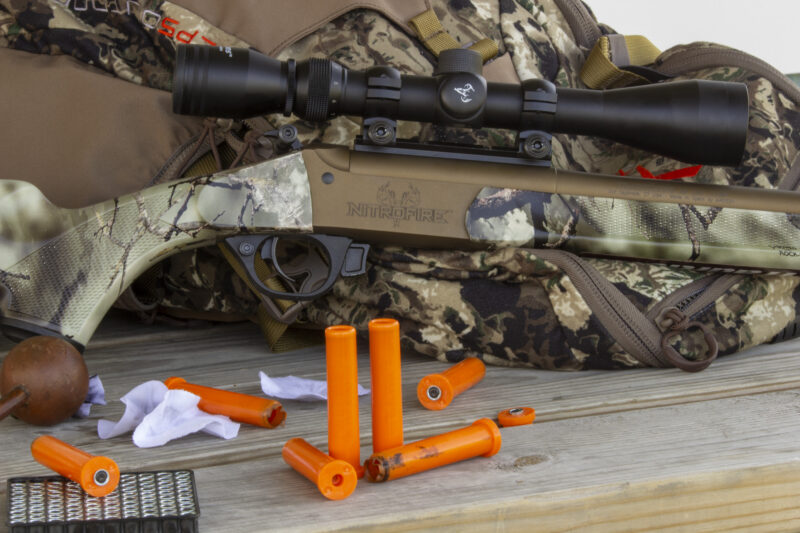
Traditions Performance Firearms partnered with Federal to develop the FireStick system.
The FireStick propellant package is inserted from the breech (along with the user-installed 209 primer)
while the bullet must be inserted from the muzzle, which is why the rifles are still legally
considered “muzzleloaders” in most states.
The FireStick itself deserves much of the credit because it solved problems hunters actually experience in the real world. Not marketing problems — real, live, actual hunting problems. Loose powder spills, moisture contamination, inconsistent charges and the hassle of unloading a rifle at the end of the day all went on the chopping block. None of those issues prevented generations of hunters from enjoying muzzleloaders, but nobody would honestly describe them as advantages, either. The FireStick addressed them all with a deceptively simple idea: place a precisely measured propellant charge inside a sealed polymer capsule.
Simple ideas are often the most disruptive.
Misfire
Let’s deal with the elephant in the room right away. No, a FireStick is not a centerfire cartridge, despite the misunderstanding still following the system since day one. A centerfire cartridge is a self-contained unit consisting of a bullet, primer, propellant, and metallic case. A FireStick contains exactly one component: the propellant. The bullet is still loaded through the muzzle with a ramrod, and a separate 209 primer must still be installed before firing. The FireStick simply delivers a factory-measured propellant charge through the breech.
That distinction isn’t merely academic; it’s precisely why an increasing number of state wildlife agencies have concluded the system fits within their legal definition of a muzzleloader. In many states, the defining characteristic isn’t where the powder enters the rifle — it’s where the projectile is loaded.
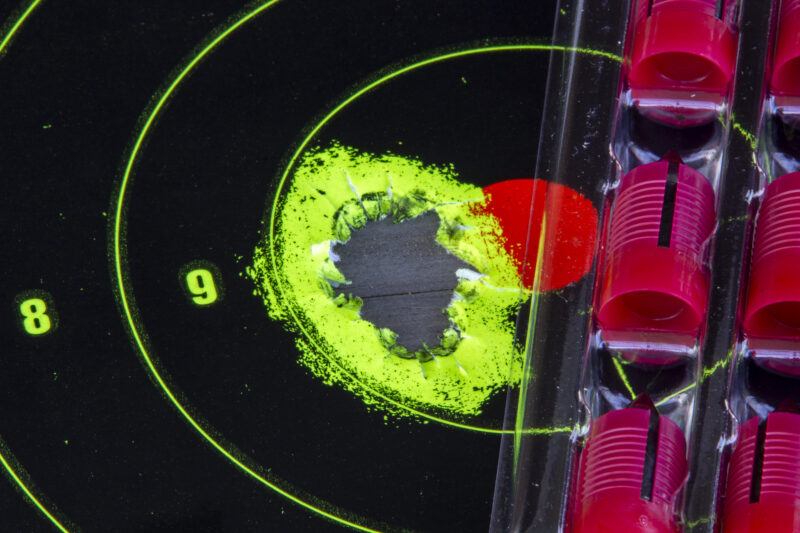
Accuracy is a prime selling point for the FireStick system. It doesn’t necessarily make the gun
itself more precise, but the consistency from shot-to-shot keeps the rifle much more accurate
than the loose powder charges used in other muzzleloaders.
Much of the advertising surrounding the FireStick focuses on accuracy. That’s true, but I think it’s also a little misleading. The FireStick didn’t magically make muzzleloaders more accurate — it made them more consistent. The biggest variable in muzzleloading isn’t the rifle; it’s the shooter. Did you pour exactly the same powder charge? Did humidity affect the open flask? Did you compress the load with identical seating pressure? Those variables disappear when every charge leaves the factory identically measured and sealed against moisture. It doesn’t automatically guarantee tiny groups, but it eliminates the biggest sources of (human) error.
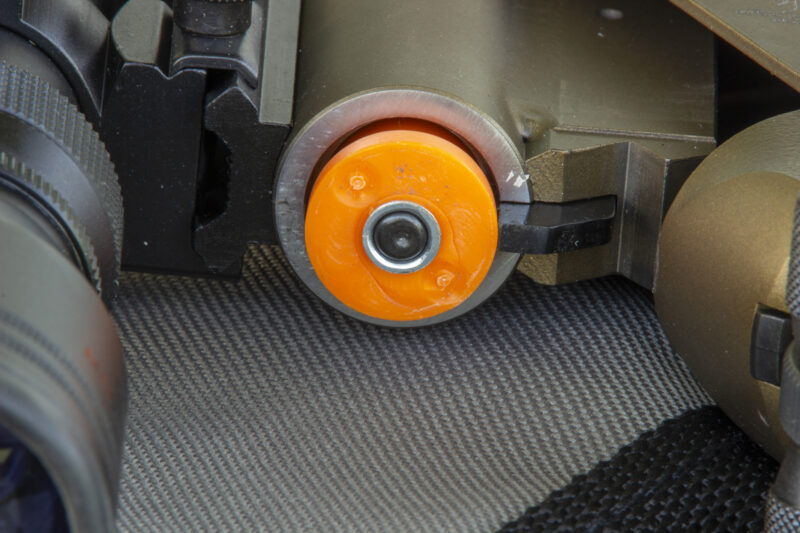
Accuracy and convenience aside, FireStick offers the ability to easily unload the muzzleloader
without having to fire a shot, plus the factory-sealed cartridges aren’t subject to misfires resulting
from rain, snow or high humidity.
Reliability matters just as much as consistency. Years ago, while hunting with a traditional Hawken during a damp December deer season, I squeezed the trigger on a broadside doe only to hear the percussion cap pop… followed by several agonizing moments of silence before the rifle finally went off. By then, the deer had long since vacated the county, and the bullet made a nice mud geyser 10 yards in front of me.
This hang fire finally convinced me modern inline muzzleloaders had legitimate advantages in reliability, especially in miserable weather, and the FireStick builds on the same philosophy. The sealed propellant charge is designed to resist moisture far better than loose powder, and because the charge can simply be removed from the breech at the end of the hunt, unloading becomes effortless.
As somebody who doesn’t like to spook game or cause alarm in the countryside by firing shots in the dark, simplified unloading is a bigger plus than it seems.
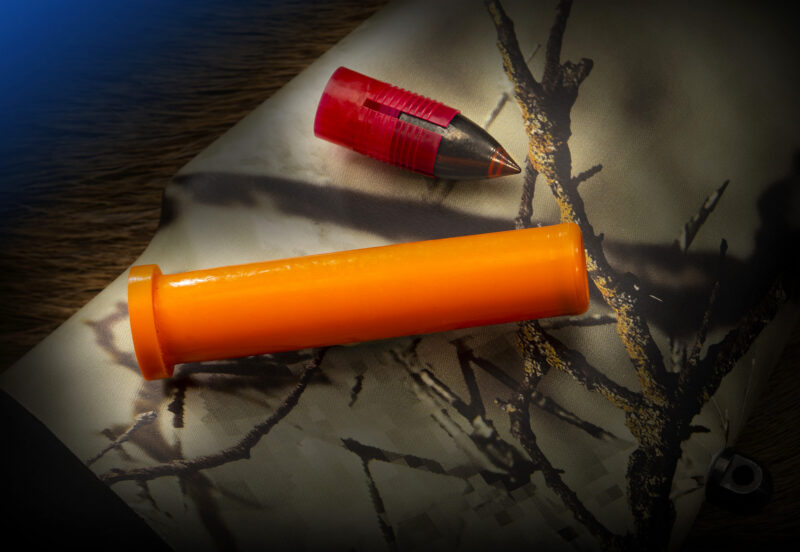
The FireStick system is designed to use saboted conical bullets. With more-precise powder charges
and stronger ignition from the shotgun primer, the conical bullets can achieve muzzleloader accuracy
rivaling cartridge firearms.
Non-Smoking Section?
There is one related question that refuses to die. Spend enough time online and someone will confidently declare the FireStick contains smokeless powder disguised as a black powder substitute. The truth is considerably less dramatic.
Federal identifies the Firestick propellant as Hodgdon Triple Eight, a proprietary black powder substitute used specifically in the FireStick system. Because it burns remarkably clean, hunters accustomed to older substitutes notice reduced fouling, consistent velocities, and easier cleanup — which naturally leads some to jump to conclusions. But cleaner is not the same thing as smokeless. Without knowing the chemistry, the only responsible conclusion is to treat Triple Eight as what the manufacturer calls it: a proprietary black powder substitute.
Ironically, none of this online squabbling has much to do with polymer capsules. The controversy has always been philosophical.
I understand the traditionalists because I’ve been one. Some of my favorite days afield have been spent carrying a traditional long rifle through quiet winter woods, savoring the smell of real black powder smoke and the deliberate pace that comes from having one carefully prepared shot. Hunting with a charcoal burner isn’t simply about killing a deer; it’s about stepping backward in time for a few hours.
At the same time, I’ve watched history repeat itself. Inline rifles were once dismissed as too modern; 209 primers were criticized as unnecessary, and saboted bullets were controversial. Scopes on muzzleloaders were practically heresy. Each innovation was accused of destroying muzzleloading, yet most eventually became standard operating procedure. The FireStick is simply following the same well-worn path.
Here’s what fascinates me most: six years ago, hunters argued over whether the FireStick should exist. Today, the conversation increasingly centers on which states still don’t allow it — a remarkable shift.
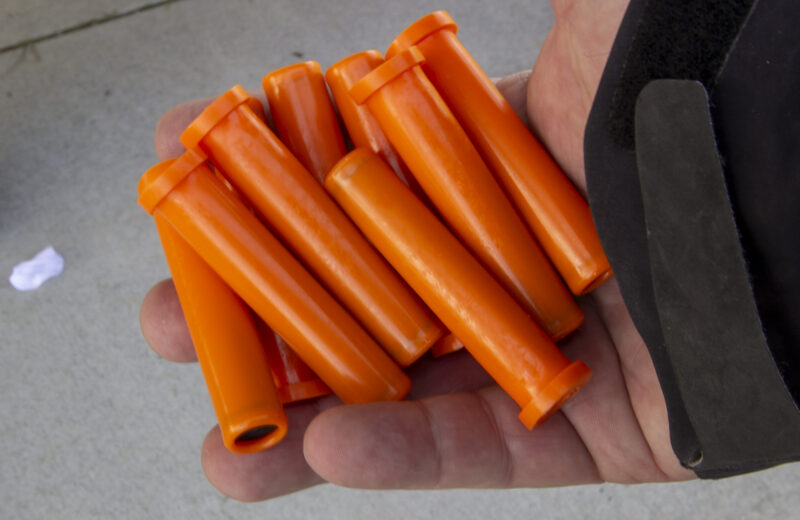
The FireStick was once the latest technology hunters loved to hate.
Today, it's finding wider acceptance as more shooters adopt it and more states legalize its use.
Whether you embrace it or prefer a traditional muzzleloader, the choice is yours.
Last Shot
Will every muzzleloader hunter embrace the FireStick? Of course not, nor should they. Traditional Hawken rifles, sidelocks, and flintlocks will always have devoted followers, and thankfully so — hunting would lose something valuable if they disappeared from our deer camps.
But once hunters stop debating whether a technology belongs and start debating where it belongs, its place in the sport is largely settled. The FireStick may never replace loose powder or pellets, but it doesn’t have to. It has already earned its place as another legitimate choice for today’s muzzleloader hunter.
Right alongside my .54 caliber Hawken in the gun safe!
Want more online exclusives from GUNS delivered straight to your inbox? Sign up for our FREE weekly email newsletters.