Pairs and Spares
Sometimes, one handgun just isn’t enough
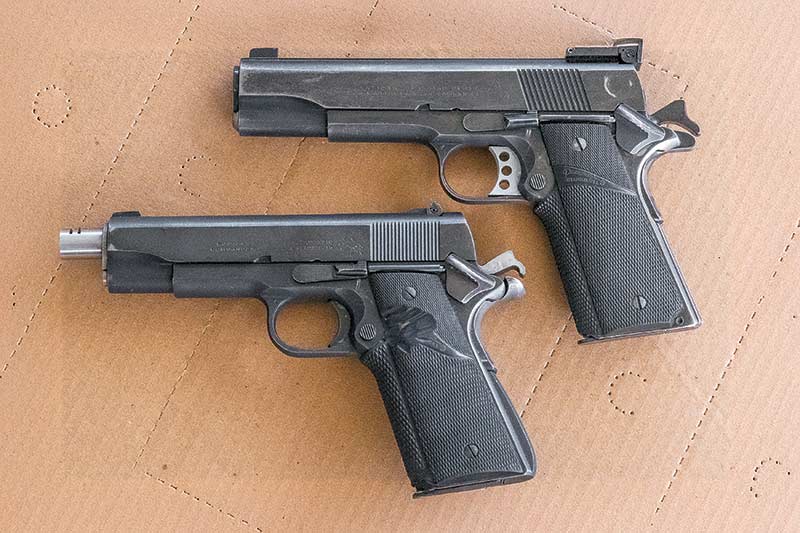
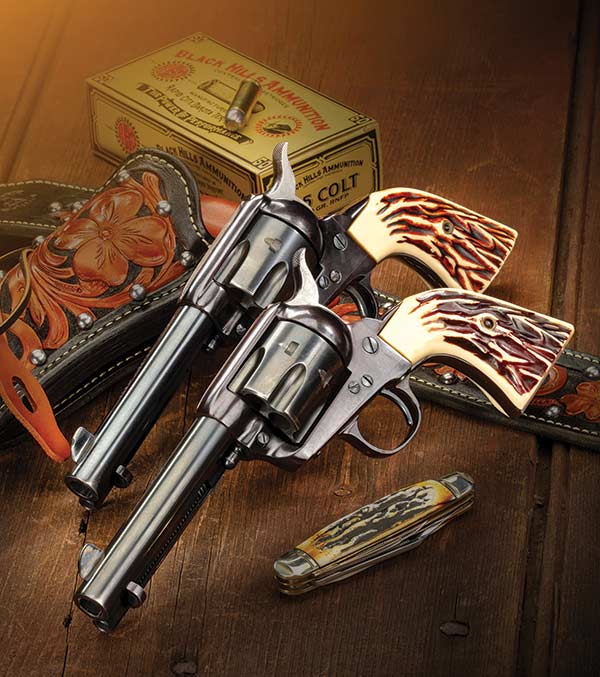
Mas’ “pair” for carry and competition, late 1970s.
The late Jeff Cooper was, among other things, the real founder of gunfight simulation handgun competition. He was the driving force behind the International Practical Shooting Confederation (IPSC) that was born in the mid-1970s. Jeff assumed his followers were as hardcore as he was, dedicated to constant heavy practice and testing with their large-caliber combat pistols.
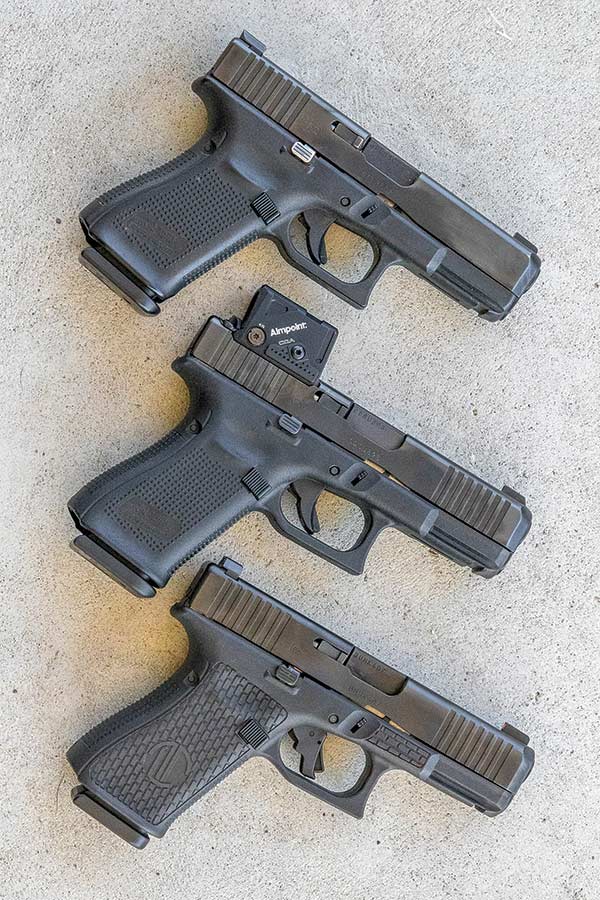
This is Mas’ current “pair and a spare,” a trio of GLOCK Model 19s.
Three for the Road
Accordingly, he promulgated the concept of “a pair and a spare.” There would be the primary gun, the .45 you carried daily and, because you were serious, practiced with constantly. The second pistol would be a functional duplicate of the first, instantly available if something broke on the primary gun. And the third? Well, the theory was if you were serious you’d be putting so many major caliber rounds through your .45s that breakage was inevitable and your backup deserved another backup. Presumably one of the three would be in the shop being upgraded or repaired at any given time if you were a true enthusiast.
Back then, in the late ’70s, my primary was a Colt National Match tuned by Nolan Santy, backed up by a Colt Combat Commander fitted with a 5″ ported barrel and S&W adjustable sights by John Lawson. Lawson was then the gunsmithing editor of our sister magazine American Handgunner. The final gun was a fixed-sight WWI vintage Colt 1911 that had been subjected to assorted gun butchery since I was 12. Each of them had occasion to shoot IPSC matches and serve for concealed carry.
As I write this, I find myself working with another “pair and a spare” set. My primary income is from teaching firearms and deadly force encounters. I got away from teaching with custom guns when I realized X number of students needed the instructor to be a role model with a pistol just like the one the student bought at the gun shop. At the moment, my teaching battery consists of three Gen5 GLOCK 19s.
The primary is out-of-the-box with stock AmeriGlo sights. It’s my daily carry pistol and also my teaching gun. There’s an identical one with the ACRO COA red dot, because a lot of my students now show up with carry optics. The third has had its grip subtly reshaped by Ernest Langdon at Langdon Tactical Technologies. Arthritis has made the middle knuckle of my middle finger sensitive to the shape of most striker-fired pistols and it saved pain to use this gun for the 850 rounds of Tom Givens’ excellent Rangemaster Instructor Development class when I took it recently. If anything had gone wrong, the carry M19 was in the car and ready to take its place on the firing line. Due to arthritis in the thumb, all three have the magazine release button on the right where the trigger finger can activate it.
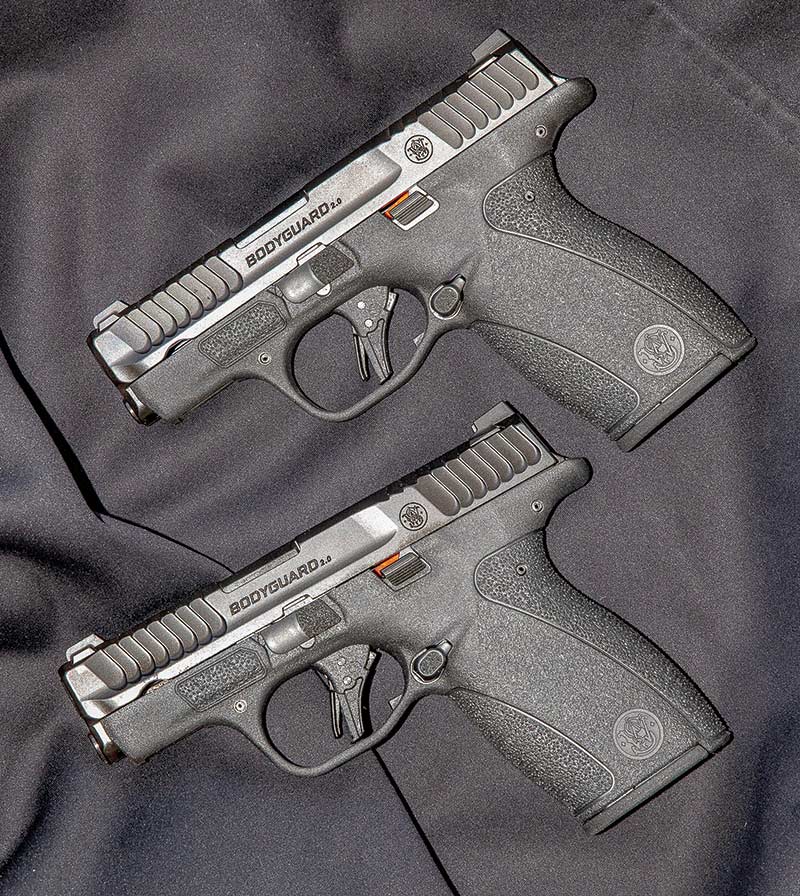
You chose the new S&W Bodyguard 2.0 .380. How about getting a second one?
Different Approaches
There are different ways to apply the concept. Speaking of Tom Givens, one of the very best in the armed self-defense teaching business, he also teaches with the same type of gun he carries — a full-size 9mm service pistol backed up with two spare mags because that’s what his intensive analysis of civilian gunfights suggests is the best setup. Sometimes it’s a GLOCK 17 and sometimes a Smith & Wesson M&P. In each case, he will have an identical spare. They will be set up exactly the same. One will take the beating of constant demonstration shooting and his own intensive personal training. The other is the carry gun. Every few months, he’ll run three magazines of carry loads through it to verify. The rest of the time, the heavy wear is going on the “training gun” so as not to wear out the “self-defense gun.”
Makes sense to me. While the identical pistols are ideal, it’s probably enough that each operates the same way, takes the same ammo and magazines, and fits the same holsters.
There are other rationales for having a spare of your most used handgun(s), whether it’s carry or competition. As Givens points out, guns are machines … machines wear … and they can break or otherwise go out of adjustment.
You might want to lend your favorite carry gun or match pistol to a valued friend to try for a month. You want them to have what you consider the best, right? During that period you don’t want to be using “second choice” for your own needs, correct? Voila: The pair/spare concept is validated in another context.
You might be taking that same friend or relative to a match or on a hunt. The two of you might get scheduled to shoot at the same time on different bays or squads. Two of the same ideal-for-the-purpose handgun will make things a whole lot easier. My favorite match of the year is the Pin Shoot in Michigan. A lot of friends, readers and students take my advice and attend themselves. All usually have a suitable stock service pistol, but not all have a recoil compensated .45 that’s more suitable for some of the events. So, each year I take two custom compensated 1911 .45s. There have been years when one went down and I needed the backup for myself, but most often I’ve been shooting one of them on Table G while a friend or graduate was shooting the other on Table A. Works out great.
On a More Serious Note
If you’ve had to use your defensive handgun for its intended purpose, it’s going into evidence and it’s going to be there for a while. If you’ve righteously shot a gang-banger and his buddies are out for revenge, you need a good carry gun now more than ever. It’s a lousy time to have to break in a new gun or, heaven help you, in some jurisdictions endure a waiting period to buy a replacement. At such moments, you’ll be awfully glad you heeded Jeff Cooper and had a “spare of a pair” ready to go immediately at home.
“A pair and a spare.” Jeff Cooper was onto something when he gave us that good advice.