Chest Packs, CCW and
Outdoor Adventure
Why I Switched and Never Looked Back
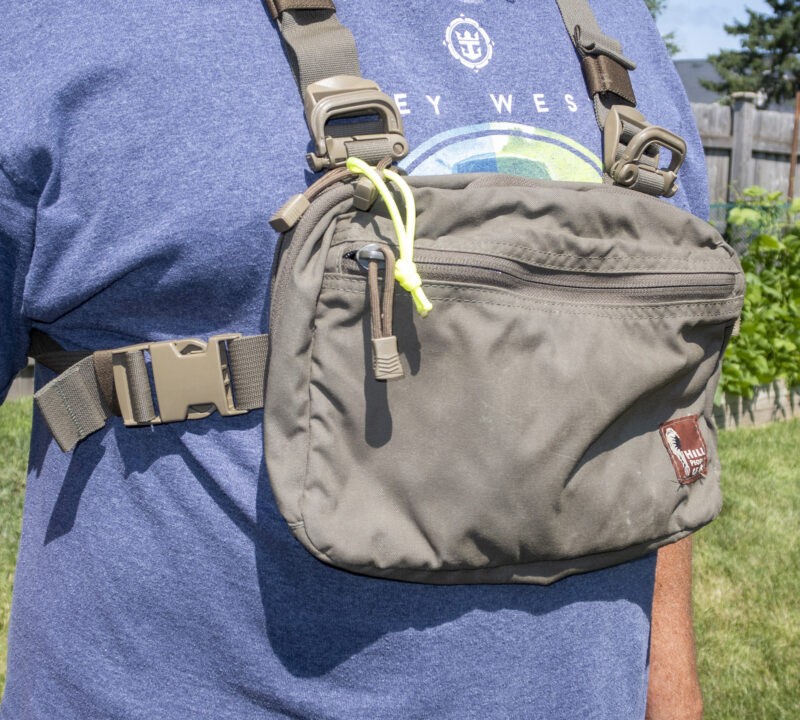
The chest pack might seem more at home on military operations, but savvy outdoors enthusiasts
are discovering how useful the bags are to carry frequently-used gear — and concealed firearms —
without interference from pack straps or hip belts.
There are few things that will make you reevaluate your choice of sidearm faster than a steaming pile of fresh bear scat in the middle of a mountain trail.
The setting was a ridge high in the Smoky Mountains and moments earlier, I had been feeling rather pleased with myself. I’d devised what I thought was a clever CCW carry system — a small semi-auto tucked into a modified water bottle carrier with hand-carved foam inserts and a nylon holster. It rode comfortably on my hip belt, was very accessible and, at least in my mind, represented a tidy solution to the age-old problem of carrying a handgun while wearing a backpack.
Then I rounded a bend in the trail and found unmistakable evidence I wasn’t alone. Suddenly, the little pistol I’d been so proud of seemed awfully puny.
Whether a .380 ACP loaded with hot hollow points would discourage an angry black bear — or merely irritate him to further violence — was a question I had no desire to answer firsthand. What struck me most was the realization I hadn’t chosen the pistol because it was the handgun I wanted to carry — I chose it because it was the largest my improvised rig would accommodate. This realization stayed with me for the rest of the hike and the drive home.
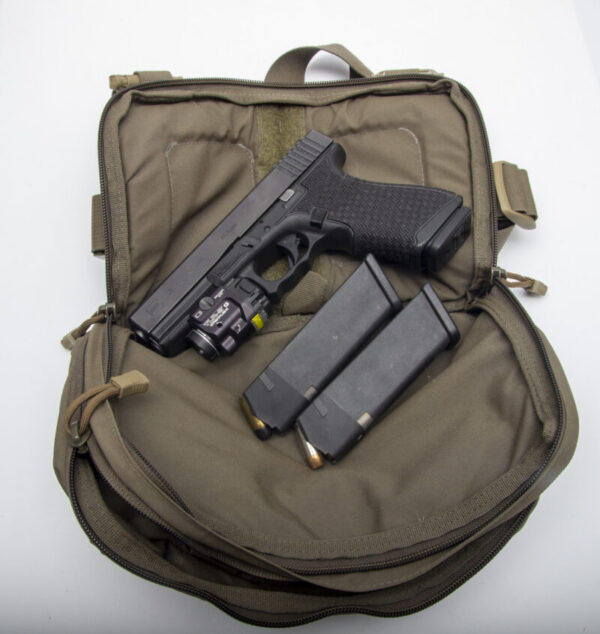
A chest pack can comfortably accommodate nearly any firearm you might want to carry.
Here, a Glock 21 — even equipped with a light — and two loaded magazines gives you plenty
of firepower for two-legged trouble, black bear, hogs or mountain lions.
Weighing Alternatives
Every holster is a compromise, and the problem is compounded orders of magnitude when you’re wearing something on your back. High-ride belt holsters, inside-the-waistband or appendix-carry rigs just end up covered beneath a backpack’s waist belt. Low-ride external holsters work well but flop around when scrambling and offer no concealment or protection for your gun. Shoulder holsters tangle with pack straps. Carrying a handgun inside the backpack itself may be comfortable, but it’s painfully slow if you actually need the gun. In solving one problem, each creates another.
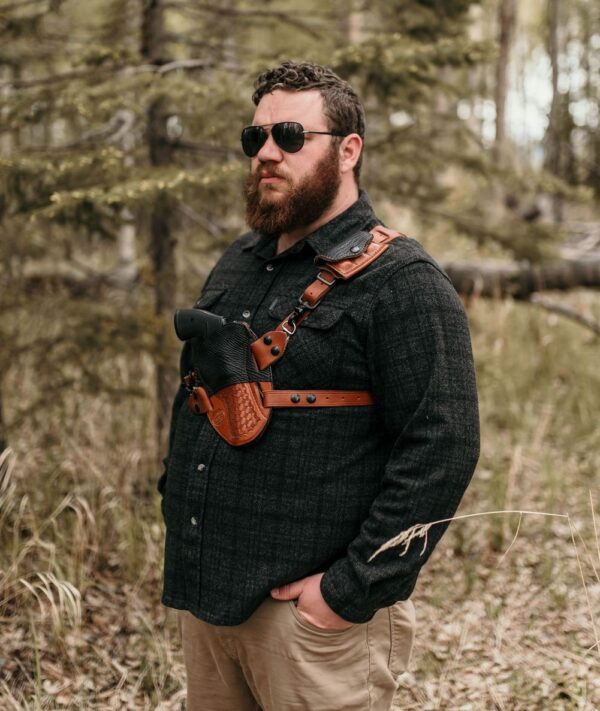
If you’re traipsing around in grizzly country, it’s hard to beat a chest holster such as this Chesty Puller
from Simply Rugged Holsters. It is much quicker than a chest pack but doesn’t hide your firearm,
even though Simply Rugged owner Rob Leahy pointed out, “A button-up shirt does wonders around town.”
There is also the “Concealed” part of “CCW” and the general advisability of wearing your horse pistol in the open while hiking. Actual handgun chest holster rigs work fine in bear country but depending on your location, the unspoken looks from others might range from “oof course” to “you’re obviously a psycho-killer; I’m calling 911 once I’m out of sight.” In Montana or Idaho grizzly country, you probably won’t get a second glance but back East, wisdom (and often the law) suggests keeping your blaster hidden from others.

The Skyweight Utility Chest Pack (MSRP $70) from 5.11 Tactical is another quality chest pack which,
as shown here, serves as a convenient and quick location to stage bear spray.
Things Changed
About 15 years ago, the outdoor handgun-carrying conundrum changed when I purchased my first Hill People Gear Kit Bag. I wasn’t looking for the latest cool-guy tactical gadget; I simply wanted a way to carry a real fighting handgun while hiking without giving up accessibility, discretion or comfort. I’ve been using chest packs ever since.
Once noteworthy in their uniqueness, they’ve become nearly as common on hiking trails as trekking poles and hydration bladders. Some are designed specifically for concealed carry while others are intended for fly fishing, trail running or general outdoor use. Whatever the intended audience, they all capitalize on one simple fact: the center of your chest is one of the few places not already occupied by backpack straps, waist belts or other gear.
For me, that’s where the advantages begin.
Availability
The most obvious benefit to chest packs is concealed accessibility, because wearing a backpack or other equipment no longer dictates where I can carry a handgun. Whether I’m climbing over deadfalls, scrambling up rocky trails, casting a fly rod, or sitting on a mountainside eating lunch, my pistol remains exactly where I expect it. It doesn’t disappear beneath a hip belt or get buried beneath rain gear and water bottles.
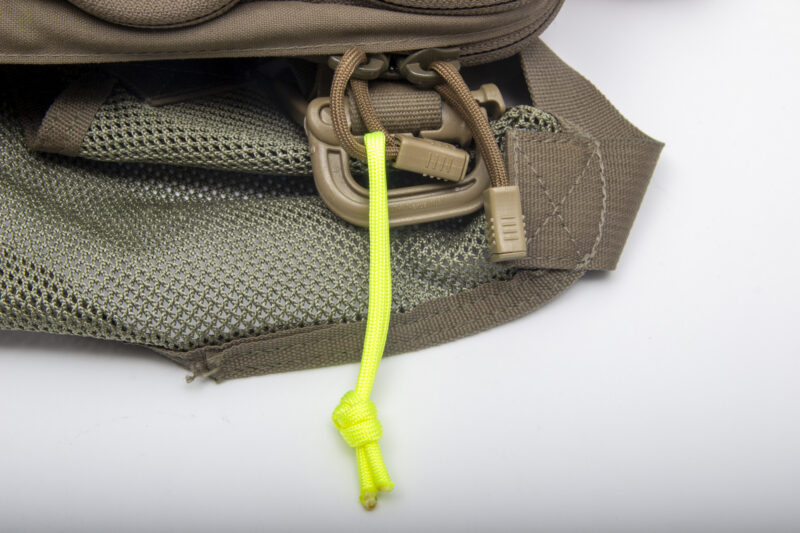
Whenever Brent uses a pack or bag to hold his firearm, he adds a bit of high-visibility paracord to designate which zipper
allows access to your firearm. Otherwise, you’ll invariable guess wrong when the situation is critical.
And yes, I’ve carried pistols on my beltline while wearing chest waders. This is an example of youthful hope triumphing over realism. I had a sudden epiphany the day a lousy IWB clip holster became dislodged and the whole rig started migrating south. True story.
For those warming up to argue tactical considerations — No, a chest pack isn’t as fast as a quality belt holster or dedicated chest holster rig. You’re adding zippers to the presentation, which can add a second or two to the process. However, a chest pack is also about three universes faster than digging through a backpack or even a dedicated sling bag when seconds matter.
Or fumbling around the knees of your chest waders…
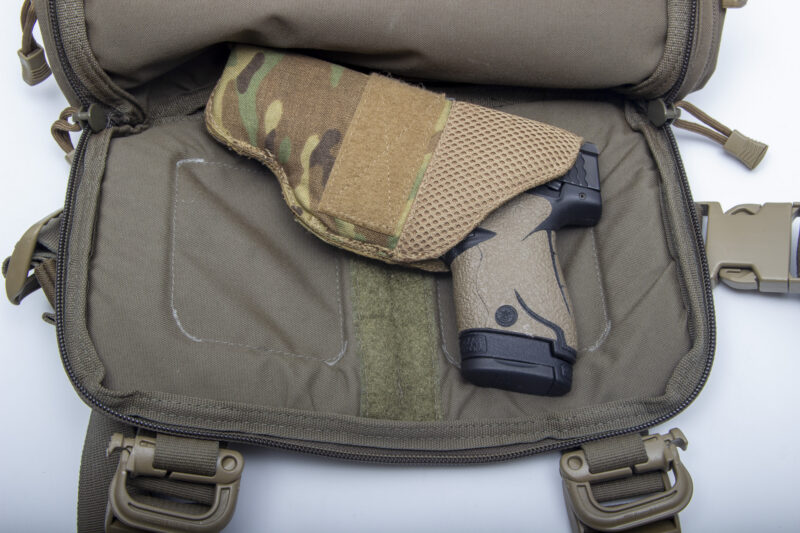
Most chest packs offer Velcro or some other means of securing a holster inside. It’s not absolutely necessary,
but it helps keep the gun in place and speeds up the presentation since you don’t have to fish around to obtain a firing grip.
Like any carry method, efficiency comes through consistency. I stage the zipper pulls where my support hand naturally finds them and organize the pistol compartment so I can establish a full firing grip before the gun leaves the pack. I found compact pistols and revolvers benefit from some type of internal scabbard or soft holster to keep them from shifting during miles of hiking. Years ago, I also used a minimalist Kydex trigger guard tethered to the bag with paracord, so it peeled away during the draw. While I’ve relied on this system less over time, it provided welcome peace of mind as I refined my setup.
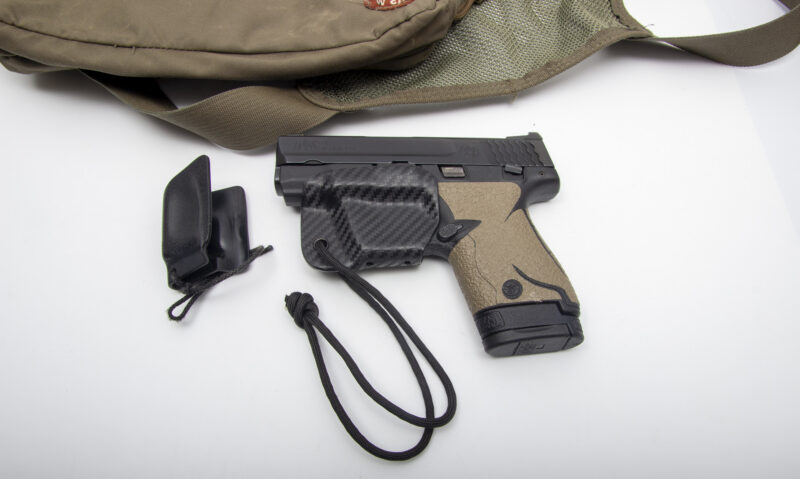
For extra security when making a presentation, a trigger guard cover or “bikini holster” offers additional piece of mind.
When anchored to the inside of the pack, it doesn’t slow down your draw stroke.
And More…
One major side benefit of a chest pack is that it can carry far more than a handgun in a safe, secure, and readily available spot.

An example of what Brent carries in his Viktos Low Key Chest Pack when hiking.
His choice of handgun is hidden in the rear compartment, while the all-important
freezer bag for phone or wallet waits in the front compartment.
When hiking, my chest pack will contain an ever-changing array of things such as my phone, wallet, keys, flashlight, pocketknife, GPS, energy bar, a cigar, and maybe even a few first-aid essentials. Everything I routinely reach for throughout the day is literally at my fingertips and it is even more valuable while fly fishing without a vest or backpack.
Anyone who has spent much time wading knows your chest is usually the highest dry spot on your body. A chest pack keeps fly boxes, tippet spools, floatant, leaders, forceps and other essentials organized and readily available. When you add a concealed handgun, you have a compact system that holds everything you need in one spot.
Finally, I’ll also mention a chest pack makes it easy to grab your gun during a trip to the latrine in areas where toothy critters abound. Without getting too descriptive, communing with nature “outdoors presents a major self-defense problem,” but a chest pack tidily resolves the issue.
Downsides
There are, of course, tradeoffs. The biggest is heat.

If you’re worried about attracting attention by looking “too tactical,” most manufacturers offer models
in different colors, such as this Hill People Gear Kit Bag in blue.
During warm- or even moderate-weather hikes, expect your shirt to become soaked beneath the pack. Perspiration collects quickly, and sweat is stunningly corrosive to firearms, on par with raw seawater. Stainless steel isn’t immune, and blued guns deserve even more attention. After every long hike, I unload the pistol, wipe it down with a lightly oiled cloth and inspect the magazine, sights and exposed metal. Two minutes of maintenance can prevent a lot of unpleasant surprises.
Don’t ask how I know this — this is why I tend to carry polymer and nitrided pistols when outdoors.
Chest packs also require practice. A zipper introduces another step into the draw stroke, and there is no substitute for repetition. Dry-fire practice with an unloaded firearm will quickly teach you where to position the zippers, how much to open the compartment, and how to achieve a consistent firing grip.
Appearance is another consideration. Many chest packs look like military equipment strapped to your torso, which can attract unwanted attention. The latest offerings are considerably more refined, though MOLLE webbing and dozens of buckles still abound for those who have an unfulfilled need to project a look of uber-tactical. Personally, I prefer gear that doesn’t scream “I might be carrying grenades!”
Choosing a Chest Pack
After more than 15 years of wandering around the backcountry with a chest pack strapped to my torso, I’ve learned one important lesson: buy quality once.
I’ve owned exactly two chest packs long enough to offer an honest opinion — the Hill People pack and, more recently, a Viktos Low Key model. They represent two different approaches to solving the same problem, and I find myself reaching for both depending on the day’s adventure.
The Hill People Gear Kit Bag (MSRP $150) is, as far as I’m aware, the original modern concealed-carry chest pack. Mine has been dragged through brush, bounced over miles of rocky trails, soaked in rain, baked in the summer sun and generally treated with all the kindness one would expect from a reckless outdoor writer. It still looks remarkably good, albeit the olive drab nylon is a bit faded and stained, which I think makes it look a bit sexier.
If I had to describe the Kit Bag in one word, it would be “purposeful.” It’s minimalist by today’s standards, lacking many of the organizational accessories found on newer designs, but that’s also part of its appeal. It carries a handgun securely, leaves room for a few essentials and gets out of the way. The non-padded suspension system is exceptionally comfortable, even under a loaded backpack, and the overall construction borders on overbuilt. If someone told me it had been stitched together from retired military ALICE packs, I’d believe them.
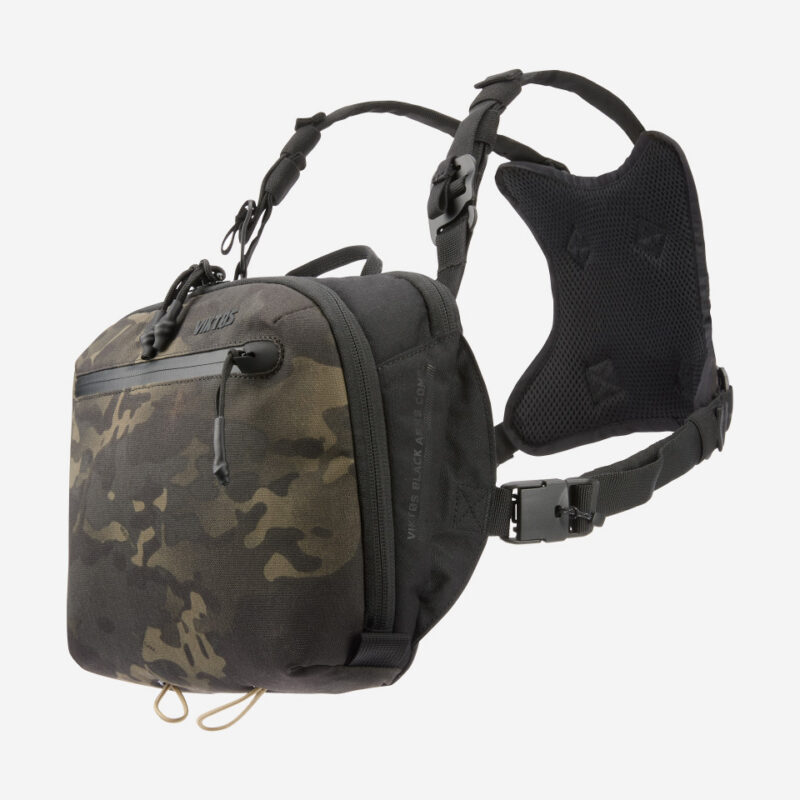
The Viktos Low Key Chest pack takes a high-end approach with plenty of figurative bells and whistles.
The padded harness is also one of the most comfortable.
The Viktos Low Key Chest Pack (MSRP $95) takes a different approach. Where the Hill People Gear bag leans toward Spartan, the Viktos is positively feature-rich. Additional organization, improved accessibility and thoughtful storage options make it feel more like a compact piece of everyday gear than simply a concealed-carry pouch. I also find the harness just a bit more comfortable, especially during shorter hikes or when I’m not carrying a heavy backpack. It also comes with a removable shoulder strap.
The tradeoff is size. Those extra features and padding come with additional bulk. On hot summer hikes, you’ll notice the insulated footprint against your chest. Depending on the weather, the distance I’ll be covering and what I expect to carry, I choose between the two. Some days I appreciate the simplicity of the Hill People Gear bag. Other days, the extra organization of the Viktos wins out. For what it’s worth, the Hill People Kit Bag stays in my fly-fishing gear stash in the truck, while the Viktos lives in my hiking gear closet.
I’ve handled several other brands at trade shows and in gun shops, but not enough to offer meaningful field opinions. One thing I do recommend paying close attention to is the suspension system. A chest pack lives or dies by its harness. Wide, well-designed straps distribute weight comfortably over miles, while quality buckles and hardware survive years of use and abuse. Thin webbing, bargain-bin plastic hardware and poor adjustment systems on weird-named imports — i.e., those offered by that big “A” store online — have a way of not announcing their shortcomings until several miles down the trail.
This is one category where I’d think twice before buying the cheapest knockoff I could find online. There are plenty of inexpensive copies that mimic the appearance of premium chest packs, even down to the ersatz logo, but appearance isn’t what you’re paying for — you’re paying for stitching that doesn’t unravel, buckles that don’t shatter, zippers which continue to work after years of dust and grit and a harness you’ll forget you’re wearing after a full day on the trail.
The knockoffs are still useful as they make thoughtful gifts … for people you don’t particularly like.
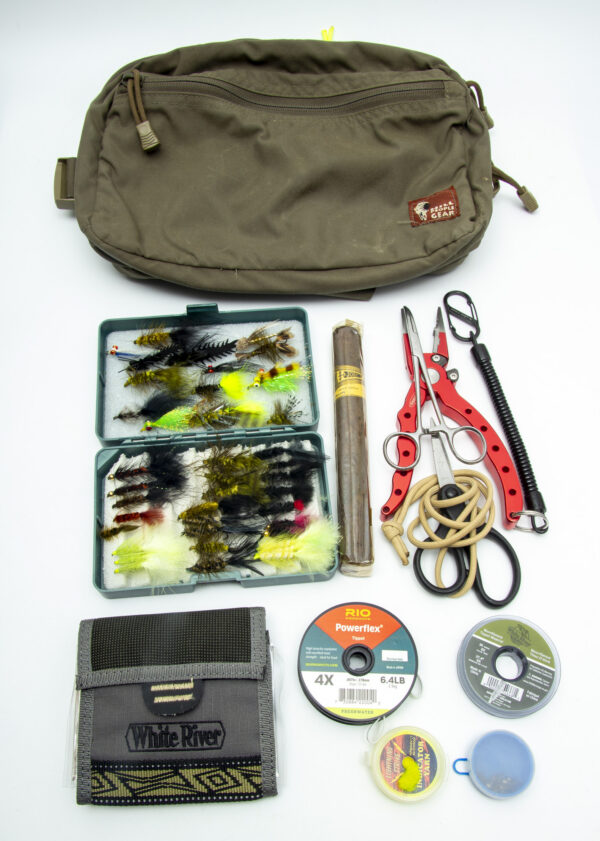
Here is a common load for Brent’s Hill People Gear chest pack for a day of fly fishing,
minus the handgun and reload hiding in the back compartment.
Independence Outdoors
Perhaps the biggest change chest packs brought wasn’t comfort — it was freedom.
For years, I selected handguns based on what I could make work with a backpack. Once I adopted a chest pack, I started carrying the handgun I actually wanted instead of the one my carry system forced upon me — an important distinction.
Whether your preferred sidearm is a compact semi-auto, a 6” Magnum sixgun, or something in between, a well-designed chest pack lets you carry it comfortably concealed without sacrificing accessibility. This is something I never achieved with belt holsters, shoulder rigs or homemade contraptions.
Looking back, I’m almost grateful for that pile of fresh bear scat.
It reminded me there is a world of difference between carrying a gun and carrying the right gun. Once I discovered chest packs, I stopped trying to force traditional holsters to coexist with backpacks and instead found a system designed specifically for the way I spend time outdoors.
Fifteen years later, I’m still looking down at the trail, but I haven’t looked back.
RELATED LINKS
LINKS
Want more online exclusives from GUNS delivered straight to your inbox? Sign up for our FREE weekly email newsletters.