Tungsten Super Shot (TSS)
True Miracle or Just Marketing?

The late Mark Hampton with a nice Missouri gobbler he downed while testing TSS shot for GUNS Magazine.
I’m what you might call a lapsed turkey hunter. As in, I briefly lapsed and didn’t go chasing gobblers for about 20 years.
Life has a way of crowding things out, even the stuff you swore you’d never give up. But lately I’ve been making a deliberate push back toward the preoccupations I used to enjoy — hunting, fishing, hiking, shooting — real-world pursuits that don’t require a screen or a password.

The wily, or more accurately — wary — wild gobbler. They tend to hang up at the edge of shotgun range
and this is why TSS shot is considered the gold standard in turkey hunting technology.
Dusting Off
With spring closing in and turkey season looming, I started digging my gear out of exile and taking stock of what had changed while I was briefly out of touch. One thing kept popping up in conversations and articles: Tungsten Super Shot, or TSS. It’s supposedly the greatest thing to happen to turkey loads since smokeless powder.
So, I did what any reasonable hunter would do: I went shopping and checked the price. This is the moment where my enthusiasm took a direct hit below the waterline.
At an MSRP nudging north of $100 for a box of five shells, TSS isn’t just expensive — it’s the kind of purchase that makes you briefly consider the fair market value of various internal organs. This is not casual ammunition; it is “That damn bird better cooperate” ammunition. It’s so expensive it makes .458 Winchester Magnum ammo look like a bargain.

A typical turkey hunting setup with a hunter looking over his decoy.
Unfortunately, the far tree line is where gobblers typically “hang up” and
this is where the increased range of TSS can be worth every dollar spent.
Then again, turkey hunters are not known for doing things halfway. This is a group willing to wake up at hours normally reserved for criminals and dairy farmers, sit motionless against a tree for hours until their body loses all feeling, and engage in open warfare with a bird whose brain is roughly the size of an anemic walnut. If this magic shell promises a longer effective range and a cleaner kill, we’ll find a way to pay for it.
Curiosity — and having no desire to sell a kidney — sent me down the rabbit hole. What exactly is tungsten? Why does it perform so well in a shotgun? And how did we get to the point where a handful of shells costs as much as a decent dinner for two?
As it turns out, the answers involve some fascinating physics, a bit of metallurgy, and a global supply chain that’s about as friendly as a longbeard that’s already been shot at twice in the last week.
What Exactly Is Tungsten?
Tungsten sounds like something cooked up in a marketing lab to separate hunters from their money, but it’s very real — and very weird — stuff.
It’s a naturally occurring metal, element #74 on the periodic table, and it has a couple of traits that immediately get your attention. It’s extremely dense, extremely hard, and has a melting point so high it borders on the absurd. This is the metal they use when things need to survive heat, pressure or both without complaining.
All of this is interesting in an engineering sense, but for our purposes, one characteristic matters more than anything else: Tungsten is heavy, actually, exceptionally heavy. And, in the world of shotguns, pellet weight is everything.
Density: The Real Magic Trick
Lead has been the gold standard for shotgun pellets for generations because it strikes a near-perfect balance of density, cost and ease of manufacturing. Steel came along later, mostly because regulations forced it into the conversation, and everyone immediately noticed the various downsides because it is significantly lighter.
However, when you’re looking for something to build pellets or projectiles, tungsten doesn’t just beat lead — it laps it several times.
Lead weighs in around 11.3 grams per cubic centimeter, while tungsten-based shot used in TSS runs in the neighborhood of 18 g/cc or about 60% heavier. This isn’t a small improvement: it’s a different weight class entirely.
What that means in the real world is simple — for the same size pellet, tungsten carries significantly more mass (weight). More mass means more energy downrange, and that means deeper penetration. Or, flipped around in a way that makes turkey hunters grin, you can use smaller pellets and more of them while still getting the lethal penetration you need.
Small Pellets, Big Consequences
This is where TSS starts to look like cheating.
Traditional turkey loads rely on larger shot (#5 or #6 lead, sometimes plated to increase surface hardness for increased penetration) because you need enough mass in each pellet to punch through feathers, skin, and bone to reach vital areas. Go smaller, and you get thick, full patterns, but they don’t kill cleanly. TSS changes the equation.
Because tungsten is so dense, a #9 TSS pellet (the same size as used in light quail loads) carries energy comparable to a much larger lead pellet. Now you’re putting dramatically more pellets into the same shell while maintaining lethal penetration.
More pellets mean denser patterns. Denser patterns mean more hits in the vital zone. More hits mean cleaner kills and a little more margin for error when the bird doesn’t stand exactly where you’d prefer or moves at the last split-second.
It’s not magic, but it’s close enough that it feels like it. It’s also the reason why the .410 bore — a literal non-starter back when I was hunting gobblers — is now fashionable among elite hunters.
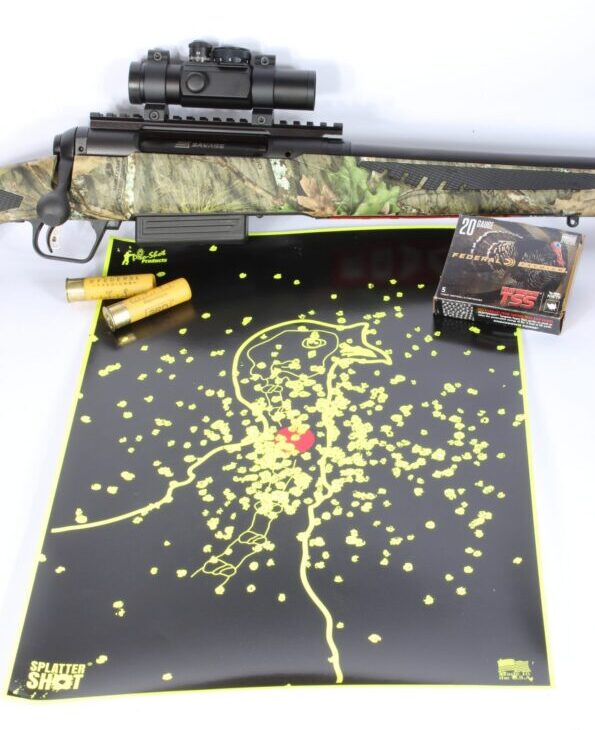
The key to TSS is smaller pellets, typically #9 shot, still carry plenty of energy
for a clean kill and with smaller size, there are more of them in the shell.
This makes the pattern more dense and deadly. Photo: Mark Hampton
Why It’s So Expensive
If tungsten is so great, the obvious question is why didn’t we switch to it decades ago? The answer is easy: tungsten is a nightmare to work with, and it costs more than sin.
Unlike lead, which melts easily and can be manipulated like pancake batter, tungsten has a melting point north of 6,000 degrees Fahrenheit. You’re not casually liquefying this stuff in a factory and cranking out pellets by the ton like you can with lead.
Instead, manufacturers use powdered tungsten mixed with binding materials, then compress and heat it in a process called sintering. It’s more complicated, more time-consuming and far more expensive than dropping molten lead from a shot tower.
On top of that, tungsten is hard. That’s great for performance, but it’s rough on barrels if not properly buffered and contained. That means more engineering, different shell components and more cost layered into every round. Plus, demand is far lower, which always equals higher cost.
So right out of the gate, you’re dealing with a material that’s difficult to produce and expensive to turn into usable shot, and demand is limited.
We haven’t even gotten to the global supply issues yet.
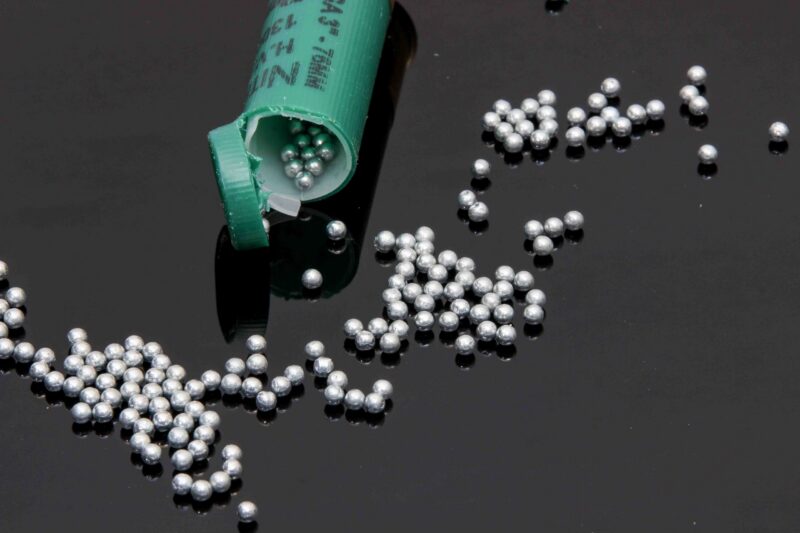
Waterfowl and other hunters have been forced to use steel shot due to its non-toxic properties.
However, hunters learned early on that lighter shot has a shorter range and is less lethal to game.
This is why TSS is sought-after for hunting turkey, goose and other long-range, large birds.
Hunting Geopolitics
Tungsten isn’t just for turkey hunters. In fact, turkey hunters are barely a rounding error in global demand because tungsten is a strategic material.
The metal is used in military applications, industrial tooling, aerospace components — anywhere you need density, hardness, and heat resistance in one stubborn package. This means you’re not just competing with other hunters for supply; you’re competing with governments and industries that buy in quantities measured in tons, not ounces.
There is also the uncomfortable reality of where much of the world’s tungsten is produced: communist China. The Reds control a significant portion of global production and, at various times, have restricted exports, imposed tariffs or simply prioritized their own industrial needs. We’ve also started playing the tariff game.
The result is predictable. Limited supply, high industrial demand and sourcing that couldn’t care less that you just want to chase a bird with a bad attitude.
Prices for tungsten shot material have climbed well north of $100 per pound, and by the time it’s processed, loaded, packaged and shipped, you end up staring at that $100 box of five shells. Looking at the price, you might wonder if you accidentally wandered into a jewelry store.

Several manufacturers load tungsten shot, such as this Fiocchi Golden Turkey TSS.
Tungsten shot is pricey, but it opens up longer shots, surer kills and even using guns
such as the .410 bore, something unheard-of in the days of lead shot.
Is It Worth It?
As with most things, it depends on how you hunt and how much you hate missing or wounding a bird.
TSS gives you an extended effective range, denser patterns and more consistent penetration. It can turn a marginal setup into a very effective one and give experienced hunters a little extra insurance when things don’t go perfectly.
But I’d be quick to remind you it doesn’t make you a better caller, it doesn’t fix bad decoy placement and won’t convince a stubborn tom to step those last ten yards into range. What it does is stack the odds in your favor — at a price that makes you painfully aware of every trigger pull.
Which, if we’re being honest, might not be the worst thing in the world if you’re a dyed-in-the-pinfeathers turkey hunter.
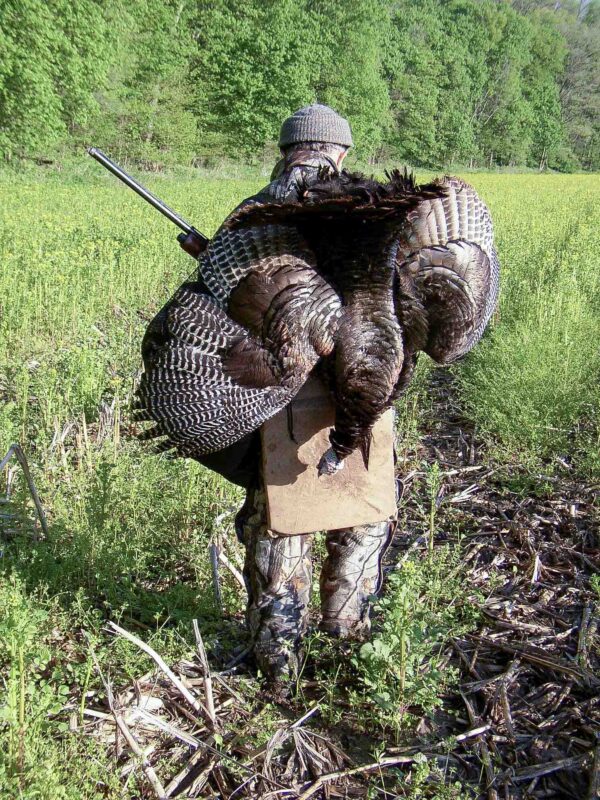
Turkeys aren’t the rocket scientists of the animal world but they are skittish beyond belief —
you have to do everything right just to get a legit shot at one. TSS shells give the hunter
an edge in shotshell performance during those final seconds so the price is an afterthought
for hardcore gobbler chasers.
Utter Ignorance
We’ve reached the part of the story where I’m supposed to dazzle you with hard-earned insight and field-tested wisdom about TSS.
I won’t.
Full disclosure: I haven’t fired a single round of it. Not one. At these prices, I’m currently waiting on a benevolent manufacturer to donate a few shells in the name of testing and journalism.
What I can tell you is this: I’m equal parts intrigued and appalled. The performance claims border on miraculous, and the price borders on criminal. I understand the pricing part of things, but I still imagine worrying about finances inducing a bad flinch every time you touch off the trigger.
Regardless, I’ll do what I can to get my hands on some TSS and see for myself — first on the patterning board, and then, if things go according to plan, on the skull of a wily old tom who has no idea he’s about to become part of both a ballistic and financial experiment.
If all goes well, there will be a Part Two to this column so I can finally answer the question “Is the hype — and the cost — actually justified?”
Until then, I’ll be out of bed at 3 a.m., groggily questioning my life choices and chasing answers the hard way. Stay tuned.
Want more online exclusives from GUNS delivered straight to your inbox? Sign up for our FREE weekly email newsletters.