The Science of a Great American

Ted Williams, rookie season for the Boston Red Sox, nicknamed the “Splendid Splinter.”
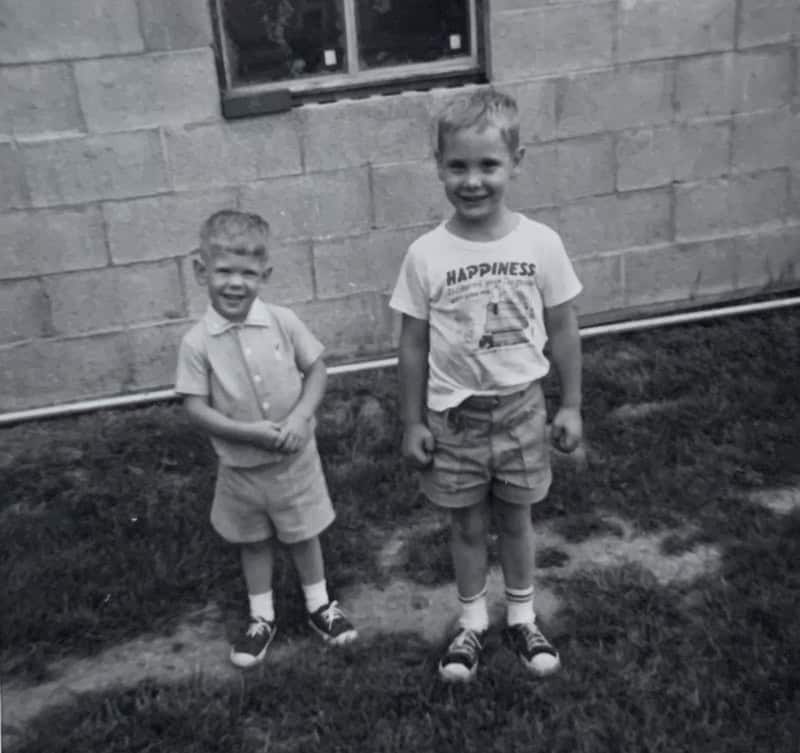
When I was a kid, Theodore Samuel Williams, better known as “Ted” Williams, was a professional baseball player for the Boston Red Sox and later the manager of the Washington Senators. Growing up in the outskirts of Washington D.C., it was here where I really appreciated him, but not necessarily for his baseball prowess.
You see, Ted Williams was signed by Sears & Roebuck to endorse his own brand of fishing rods, rifles and shotguns. These sporting goods grabbed my attention more than baseball. Later in life, I’d learn more about Ted Williams that really impressed me more than his skill of hitting a baseball.
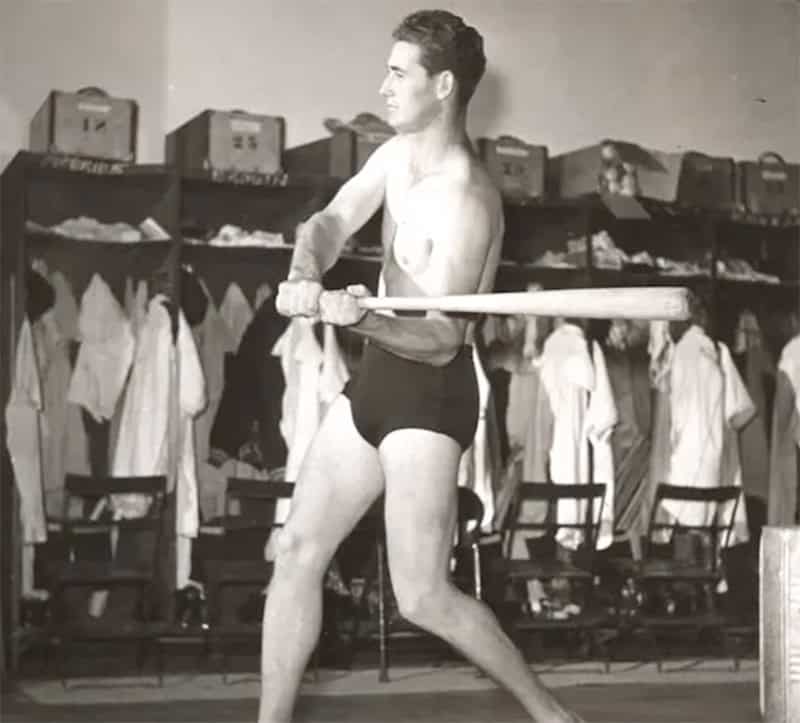
Williams always practiced his swing in hopes of perfecting it.
Pro Career
Williams played his entire 19-year Major League Baseball career, primarily as a left fielder, for the Boston Red Sox from 1939 to 1960. Considered the greatest hitter in the history of professional baseball, Williams wrote the book on baseball called “The Science of Hitting,” considered to be the best instructional literature ever written on the subject. His book is a comprehensive guide to hitting, based on his legendary career. The book is full of detailed illustrations, anecdotes, and advice on the fundamentals of hitting, pitch selection, and the mental approach involved in hitting.
Blessed with 20/10 vision, Williams was said to be able to see the seams on the baseball as it left the pitcher’s hand. For pure hitting ability, no one came close to William’s achievements. He was the last player to bat over .400 during the 1941 season. Williams was also a two-time Triple Crown winner, consisting of having the most homeruns, RBIs, and batting average. It is one of the rarest awards in Major League Baseball.
Ever the perfectionist, Williams practiced his swing hundreds of times a day, even filming it so he could critique his technique. At the age of 39, Williams batted an impressive .388 for the season. Williams’ last career at bat had a storybook ending when he hit a homerun in 1960! Williams’ career batting average was .344, with 521 homeruns and .482 “on base” percentage, which calculates walks.
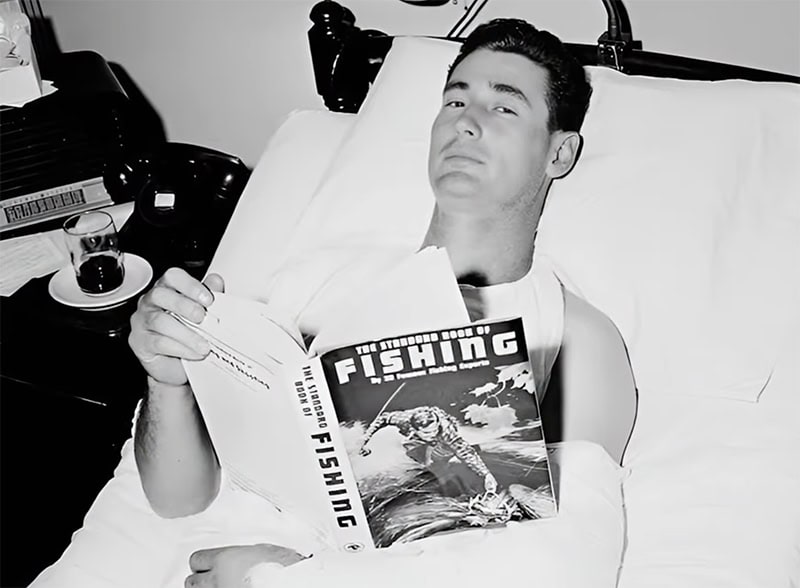
An avid outdoorsman, Williams recoups after elbow surgery in the hospital.
Proud Patriot
Williams played major league baseball from April 20th, 1939, through September 28, 1960. But I think the most amazing feat was that he missed five seasons fighting for our country during World War II and the Korean War. After winning the triple crown in 1942, Williams joined the Marines and enlisted in flight school. He was such a natural pilot and great student, the command made him a flight instructor so he could train fighter pilots during WWII.
During the Korean War, there was a shortage of pilots, and Williams re-upped, flying 39 combat missions during his tour. John Glenn was William’s wingman on many missions, calling Williams one of the best fighter pilots he’d ever seen. His excellent 20/10 eyesight allowed him to see enemy aircraft before they spotted him.
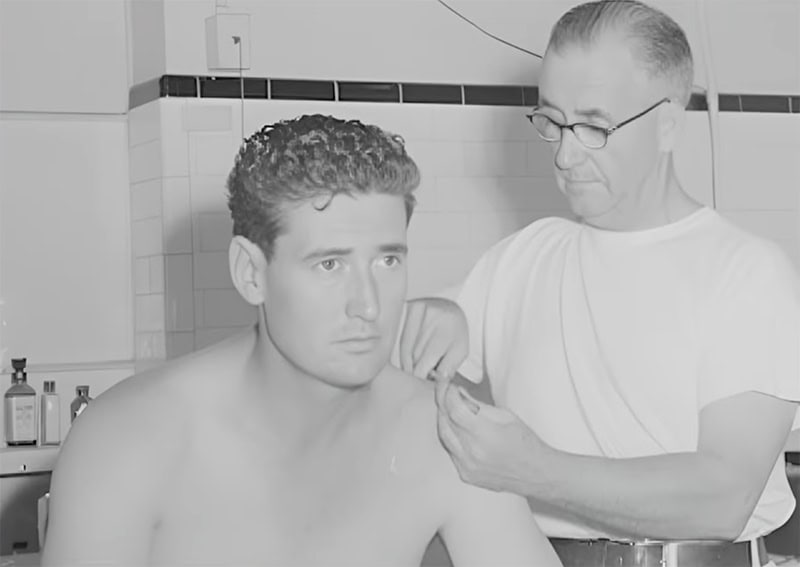
Ted getting checked by the team trainer before a game.
While Williams trained fighter pilots during World War II, he was well-decorated during the Korean War. He flew 39 missions. Williams spoke proudly of his service, stating, “I liked flying… It was the second-best thing that ever happened to me. If I hadn’t had baseball to come back to, I might have gone on as a Marine pilot”.
When asked for the best team he ever played on, Williams proudly replied, “The US Marines.” During one of Williams’ 39 combat missions, he was forced to make a dangerous belly landing in his burning jet, skidding over a mile on the runway while landing. Those who witnessed it called it a miracle that he came out unscathed; he was that good.
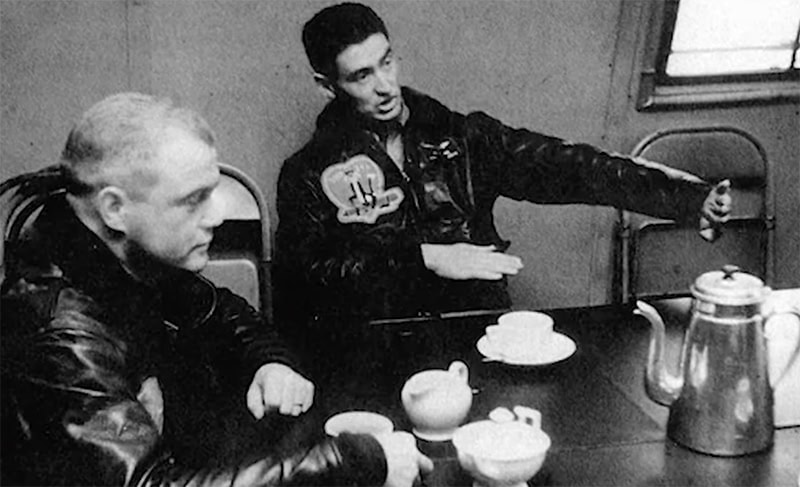
Williams explaining a maneuver to fellow pilot John Glenn.
Sportsman
Following his MLB retirement, Williams signed a six-figure deal with Sears, Roebuck and Co. in the early 1960s, endorsing and helping design a wide range of sporting goods, replacing the old “J.C. Higgins” brand of sporting goods. The line included baseball gloves, bats, balls, as well as fishing tackle, hunting gear, rifles, shotguns, and clothing, utilizing William’s expertise in hunting and fishing.
Williams was heavily involved in testing his items in the field, particularly fishing tackle (including fly fishing gear) and firearms. He acted as a consultant for Sears, highlighting his expertise in the “Big Three” of fishing: tarpon, bonefish, and Atlantic salmon.
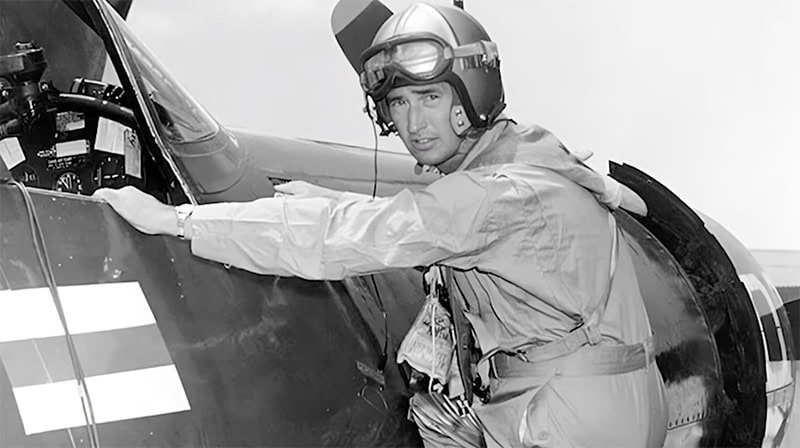
Williams was a natural pilot blessed with great eyesight and coordination.
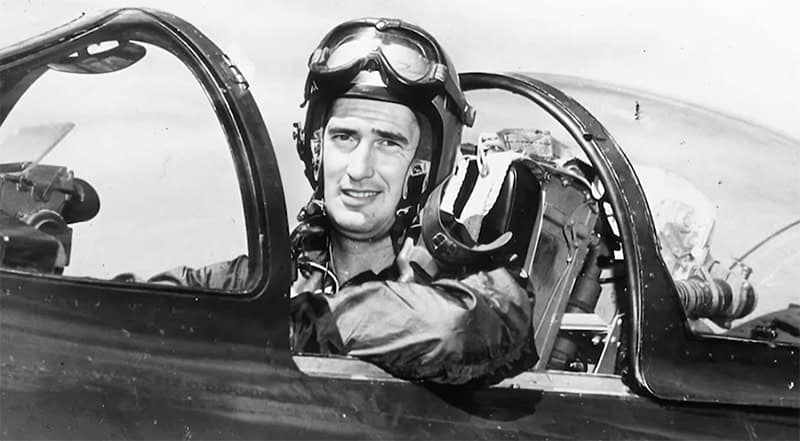
In the cockpit, ready for takeoff!
Today, the vintage sporting items displaying Ted Williams’ branded name, including shotguns, fishing gear, and baseball gloves, notably the “broken-in right” model, are highly collectible items.
The partnership lasted for years, with Sears utilizing Williams’ brand for sportsmen to enjoy through the 1960s and 1970s.
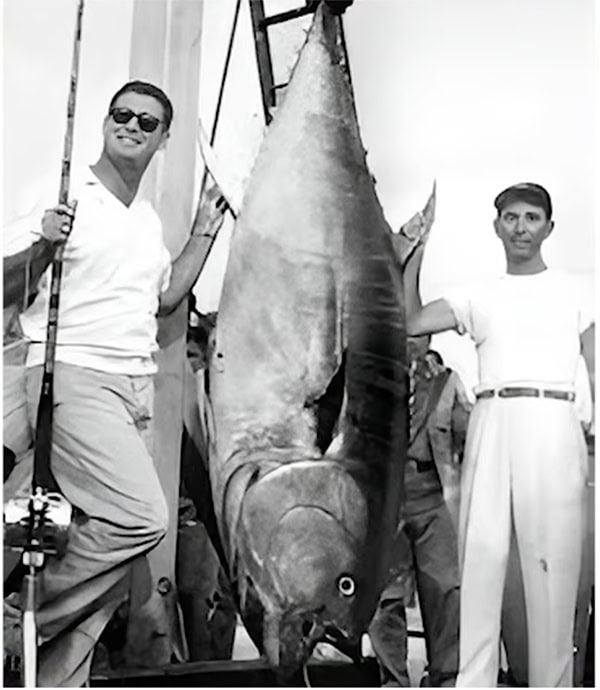
Large tuna caught by Williams after retirement from baseball.
Nowadays
How many professional athletes would halt their careers, while in their prime, to fight for their country? I’m sure there would be a few, but not many. I’m just proud that many professional athletes, movie stars, and other famous people lived when they did. Williams died at the age of 83 in 2002. He was inducted into the Baseball Hall of Fame in 1966. Now I’m on a mission to find a vintage Ted Williams levergun from Sears!
Get More Guncranks Every Week!
By submitting this form, you are consenting to receive marketing emails from: . You can revoke your consent to receive emails at any time by using the SafeUnsubscribe® link, found at the bottom of every email. Emails are serviced by Constant Contact