Colt Huntsman
This “Economy Alternative” To The Iconic Woodsman
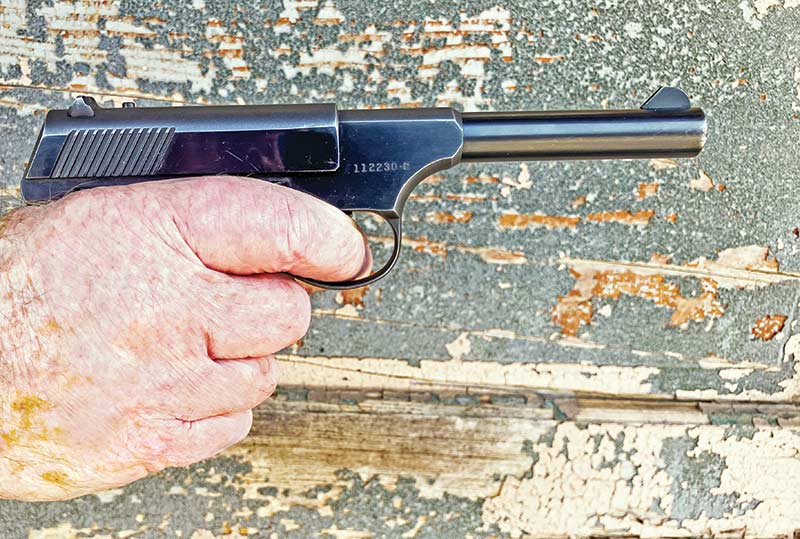
For sheer graceful “pointability,” the Huntsman — particularly in
4.5" trim — is tough to beat. Available with a 4.5" or 6" barrel, the
Huntsman was a practical and excellent alternative to the
more expensive Woodsman.
The Colt Woodsman was made from 1915 to 1977 and was easily — in all three series and several variants — one of the most highly regarded .22 pistols of all time. When you consider the Hi-Standard models and S&W M41 that were available domestically, that’s saying something. Devotees of the Woodsman included no less an outdoorsman/shootist than Ernest Hemingway, who was also known to do a bit of writing now and again.
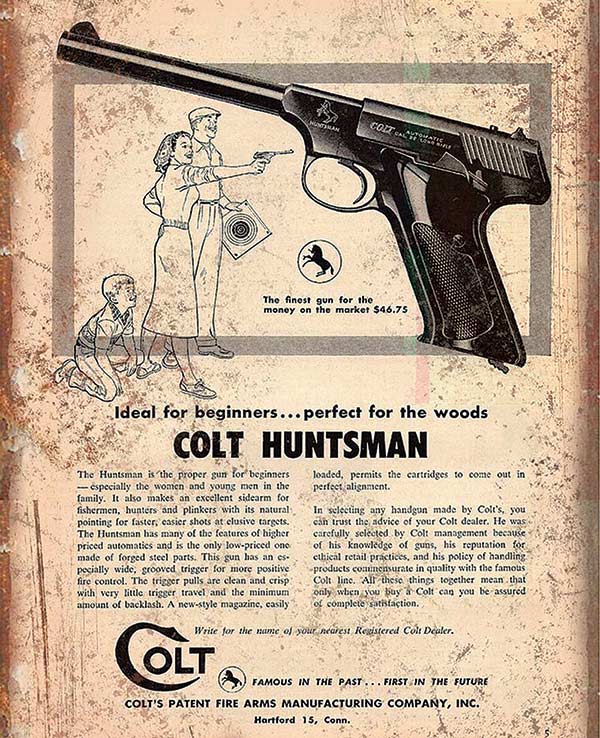
But economics can be a harsh mistress and the firearms industry is by no means immune. In 1955 Colt saw fit to issue a less expensive alternative to its top-of-the-line rimfire and so the Huntsman came into being. It was preceded in the “price” niche by the aptly named Challenger which lasted from 1950 to 1955. Unfortunately, along with the Woodsman, the Huntsman also ceased production in 1977.
The price difference at that time of the Huntsman’s introduction was $46.75 vs. $69.50 for the Colt Woodsman Sport Target. While a $22.75 differential may sound relatively insignificant today, in factoring inflationary 2025 dollars, the price gap becomes quite a bit more impressive — $270.86. By 1969 the price gap was (in 2025 dollars) $247.79.
The longer production lifespan of the Woodsman vs. the Huntsman is reflected in the numbers made — 690,000 as compared to 100,000.
Our particular late-1950s vintage Huntsman belonged to shooting buddy John Wightman, as always a much-appreciated source for out-of-print and hard to find stuff. When I first saw it, I suffered a reawakened pang of regret. Twenty-five years ago I had an identical one which, in a moment of rank stupidity and illusory (as it turned out) financial need, I’d sold. And, as the saying goes, I’d been kicking myself in the ass ever since.
This one, like my long-gone specimen, featured a 4.5″ barrel, a blade front sight, drift-adjustable rear and checkered black plastic grip panels. It features a heel-type magazine release which, although a hindrance on a combat pistol, isn’t much of a big deal on a .22 plinker. The other controls — low-profile side safety and slide lock — are equally unobtrusive yet fairly easy to access.
The Huntsman could also be had with a 6″ barrel but as a compact hiking or backpacking item, I’d go with the shorter option. I was gratified to note the manufacturing date on our test gun, having always considered the Nifty ’50s to be the Golden Decade of Colt handguns. Of course, devotees of pre-war specimens are welcome to dispute this and most likely will.
Later versions of the Huntsman featured checkered walnut grip panels rather than the plastic ones on ours. The wood Huntsman stocks lacked the thumb rest found on the Woodsman.
What it may have lacked in the eye-candy appeal of the Woodsman, along with the adjustable sights and bolt hold-open, it made up for in shootability. This is in large part due to the excellent trigger. The one on our specimen broke at a clean and crisp 3 lbs. All in all, the Huntsman was an undeniably attractive item. In a practical touch, the original Colt instruction manual refers to its “Dual Tone Finish” as follows:
“To minimize accuracy-disturbing glare, all reflecting surfaces have a glare proof ‘satin finish’ with other areas retaining the regular, high polish Colt blue.”
Cosmetics aside, however, it would be tough to think of a better small game pistol, trail gun or plinker. As an economical training item, the Huntsman is ideal. Sure, .22 rimfire has jumped up in price since the Great Ammo Scare but it’s still a better per-round deal than any centerfire load you could name.
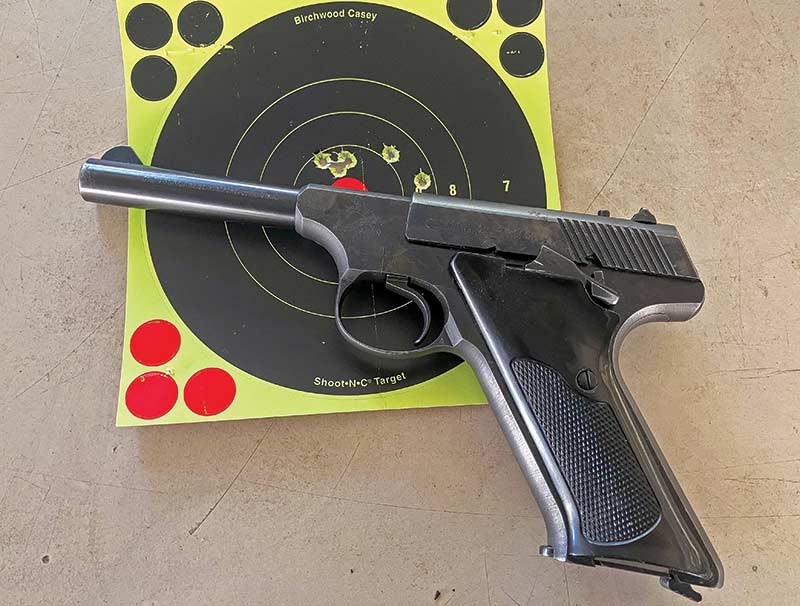
Even with bulk-pack “nuthin’ fancy” ammo, the
Huntsman put in an excellent performance.
Range Time
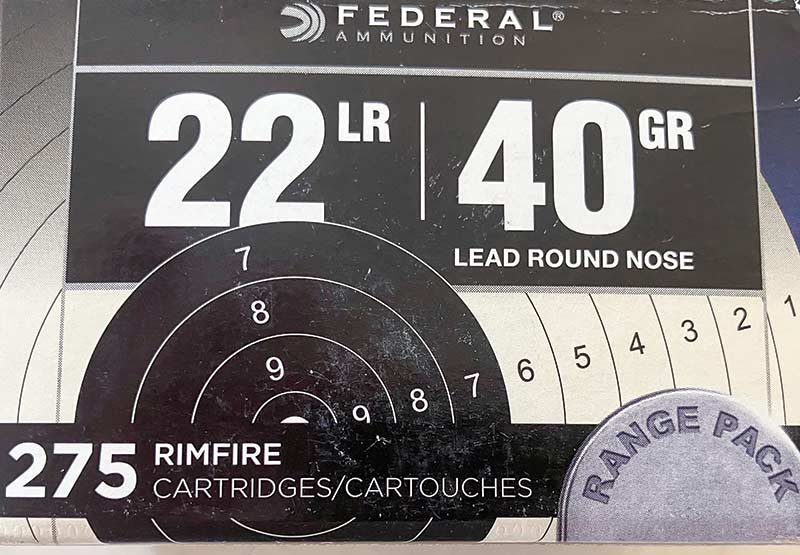
At 60′, our Huntsman consistently delivered 5-shot groups at a hair over an inch. Those fixed sights were pretty much on with the standard velocity 40-grain Federal bulk pack ammo we were using. We did experience a couple failures to feed attributable to the elderly original magazine which appeared to have many miles on it. Anyone buying an out-of-print classic .22 auto would be well advised to invest in several spare mags. Try Triple K or, if you don’t mind getting nicked a bit financially, you can hunt down Colt originals which are preferable according to what I’ve been able to ascertain.
Today, the Huntsman can be found with (almost) relative ease on the used market. Beginning bids on the auction circuit are generally around $600 to $800 — a bit less than the Woodsman Sport Model but it’s really not fair to compare the Huntsman with the Woodsman’s many variants. They all have varying degrees of collector value. Yet, if you can find a Huntsman in good shape for anything under $700, you probably ought to grab it.
Today, anyone looking for a current .22 auto of the “trail gun” persuasion is probably going to look hard and long at the Ruger Standard Auto, a Smith Victory Model or a Taurus TX22 variant. But a certain percentage of retro-minded shooters are going to seek out vintage Hi Standards and, yes, the Colts.
The old chestnut “they ain’t making ’em like they used to” may be the most overworked cliché around. However, a whole lot of clichés become clichés because there’s something to them. And the Colt Huntsman, a vintage “price” pistol that shoots well beyond its price tag, could stand as Exhibit A.