Cause & Effect Profiles
What Does Your Collection Say About You?
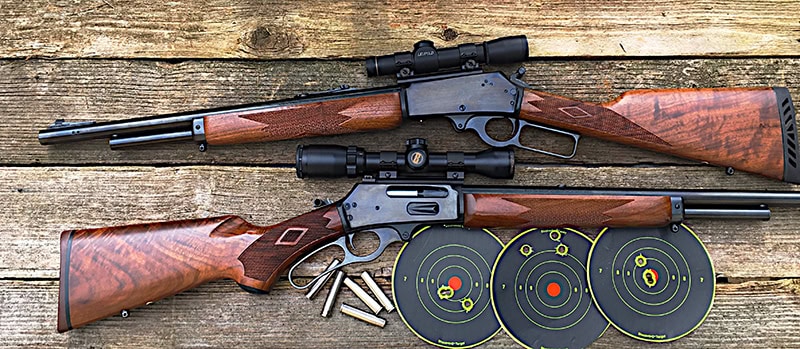
A couple of Marlin .444 leverguns Tank acquired while suffering through Marlinitis.
In 1972, the FBI started the Behavioral Science Unit (BSU) to study violent offenders. The group changed its name in 1992 to the Behavioral Analysis Unit. The unit was tasked with developing behavioral profiles of offenders while supporting investigators from federal, state and local agencies.
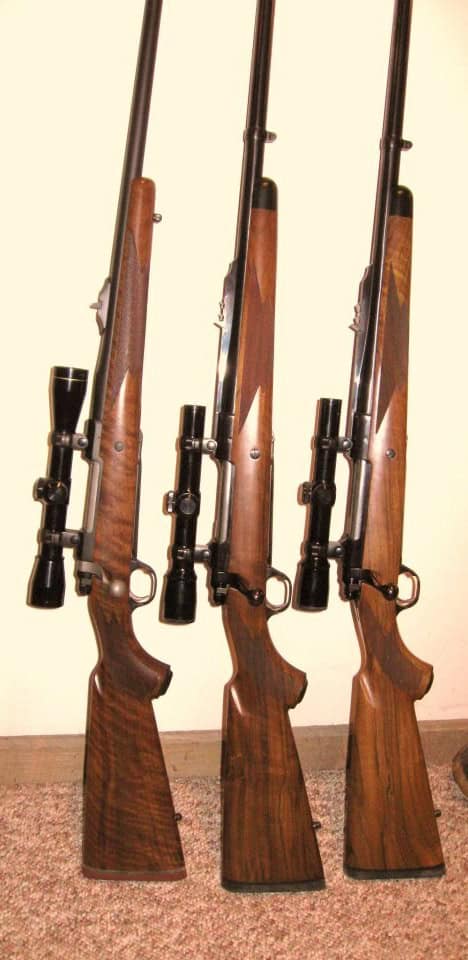
Some Ruger African rifles.
A Lifetime Of Shooting, Hunting, Handloading And Casting Bullets
Long after I’m dead and gone, and my grieving wife has Bobby Tyler take care of my guns and related gear, the pickers and gun buzzards will thoroughly check my belongings. Most won’t notice, or even try to piece together my thoughts, ideas and personality, as they examine the items I’ve accumulated over a lifetime of shooting, hunting, handloading and casting bullets. I’m sure the critical thinkers in the bunch will piece it together. These sharp-minded problem solvers will understand my thought processes by inspecting the shelves of handloading dies, sizers and presses. Then there’s the 300+ bullet molds to sort through. Books? Enough for a small library on handloading, casting, hunting and biographies of people I was interested in.

Tank used his 1905 1886 Winchester .45-70 to take this antelope.
Lifelong Accumulations
Hopefully, the inevitable won’t happen years from now, but there’s no better way of seeing what a man is thinking than examining his lifelong accumulations. It’s an autopsy of sorts for sure, only without the gore. After all, guns and gear are an extension of a man’s belief systems. Here’s my abbreviated list and how it all started with one thing leading to another. While some may yawn, others will be drooling.
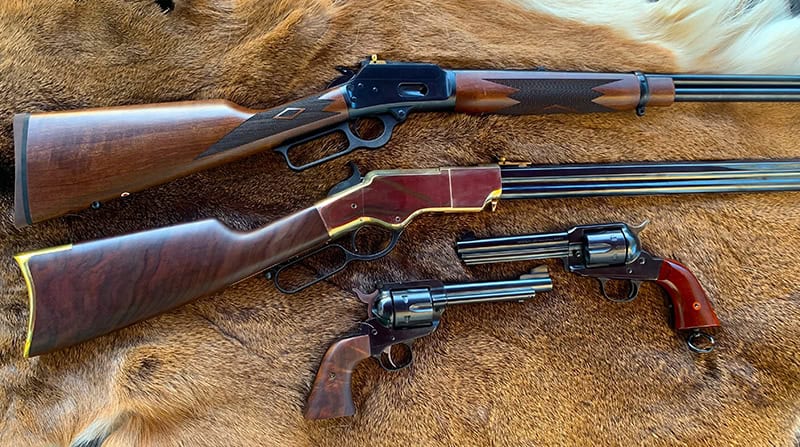
A Henry 1860 .44-40 with a Marlin 1894 .44 Magnum.
Firsts
The first of anything is always important. It lays the groundwork for what’s to follow. My first gun was my brother’s. He received a Daisy 1894 replica BB gun for Christmas when I was 5. I commandeered the gun when he lost interest with it. I learned the fundamentals of sight alignment and sight picture, and the importance of a steady trigger press, after shooting thousands of BBs. When everything meshed, I’d hit what I was aiming at.
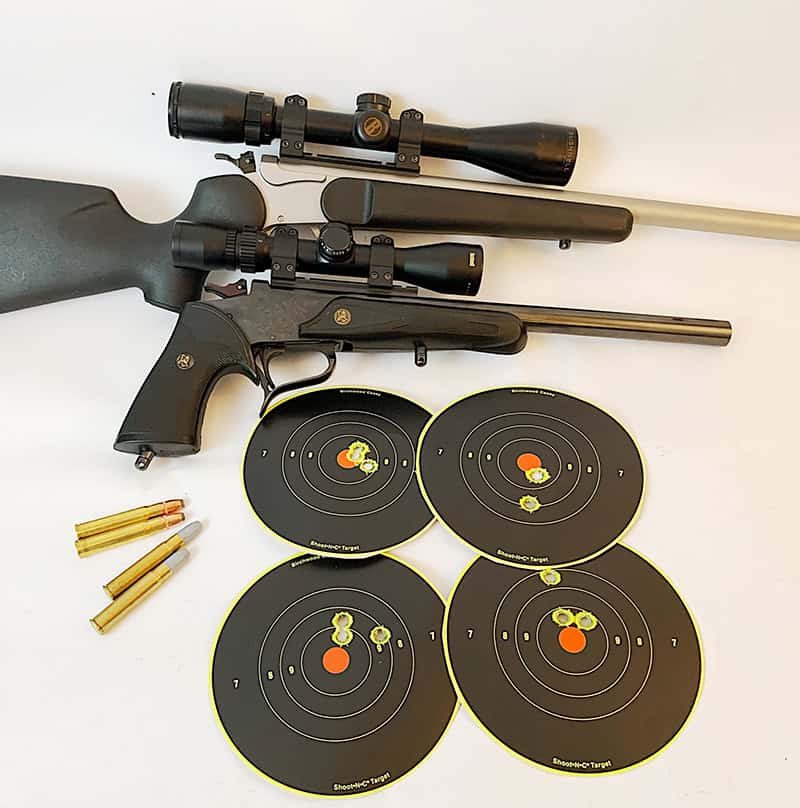
TC contenders in carbine and handgun chambered for .375 JDJ.
First Blood
I made my first kill with the BB gun. Lying prone in the backyard, I was waiting for any sparrows eating the birdseed that fell from the bird feeder marauding squirrels knocked out. I learned that by lying perfectly still, I went unnoticed. When an unsuspecting sparrow landed, I went into autopilot. The sights lined up on their own, just as the top of the front sight settled on the sparrow’s neck.
The trigger press was perfect, breaking without interrupting my sight picture. The BB struck where I was aiming, killing the bird instantly. This moment sticks with me like it was yesterday. I couldn’t have been more than 5 or 6 years old when it happened. I was a hunter.
My first “real” gun was a H&R Plainsman .22 rimfire bolt-action rifle I received for my 8th birthday. Some may think this young for a rifle, but it wasn’t uncommon back in the late 60s. Maybe we had more “common sense” back then? With the .22 Plainsman, I hunted all over my grandparents’ dairy farm in Pennsylvania when visiting. I took several groundhogs, pigeons, and other pesky grain-stealing birds who dirtied the barn with their droppings. I also used the .22 for dispatching corn-raiding raccoons I had trapped.
While the Daisy taught me the basics of marksmanship, the .22 Plainsman taught me about trajectory. By either holding over or using the rear sight elevator, I could change my impact at further distances and hit what I was aiming at.
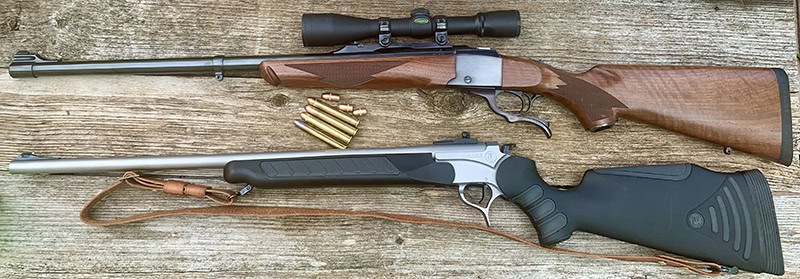
Ruger #1 and TC Encore chamered in .405 Winchester.
Bigger Game
As I got older, my thoughts shifted to bigger game, namely deer. My first deer rifle was a Remington 700 BDL .30-06 fitted with a Redfield 3X9 power scope. I started handloading shortly after, to make my ’06 more versatile. I would load 110-grain bullets for groundhogs and 180 for deer. If I ever went after grizzly, I’d use 200-220 grain bullets. I had my bases covered.
My next rifle was a Remington 700 .222 Remington. I would use this mostly as a dedicated groundhog gun. By now, I learned about specialty guns, guns with an intended purpose.
My first lever-action rifle was a Marlin 1895 .45-70. The .45-70 lit a fire under me, becoming my favorite rifle cartridge. A Ruger #1 followed, as well as a #3, both .45-70s. These rifles started my affinity for Ruger #1s. What’s better than having the confidence of only having one shot? This led to a .45-70 Shiloh Sharps.
Then the lever guns started multiplying as I fought a serious bout of “Marlinitis.” I still have recurrences of it to this day. Cartridges like .30-30, .35 Remington, .356 and .375 Winchester, and .444 were added. A Skinner Sights Bush Pilot 1886 in .45-70 was added, followed by an original Winchester 1886 .45-70.

Custom BFR’s by Brett Pikula.
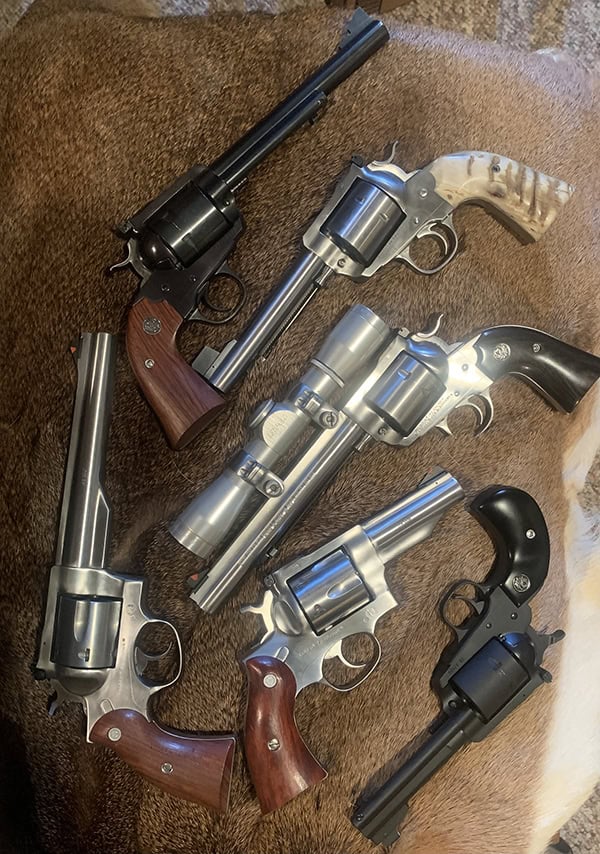
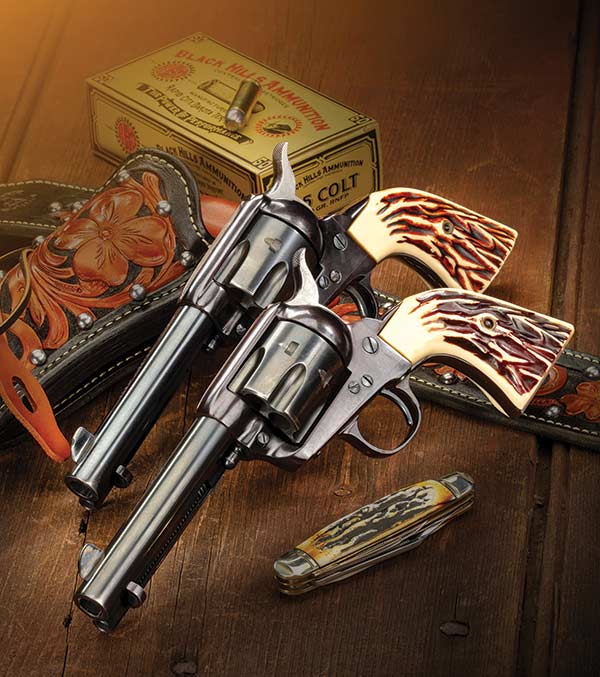
A few of Tank’s .45 Colt sixguns.
Slow And Steady
The progression was a long, slow journey spanning decades. I always say slow and steady wins the race. It’s easy to track my love for the grand old .45-7, but have I mentioned Thompson/Center single-shot carbines?
For once in my life, I was in the right place at the right time for something. Used barrels could be bought on eBay for $100-$150. Within a few years, I had several barrels and frames in my possession. The T/C strategy of only needing one frame with several barrels was one of the best marketing strategies ever. Everyone knows how lazy humans are. We end up with just as many frames as barrels, or at least try to.
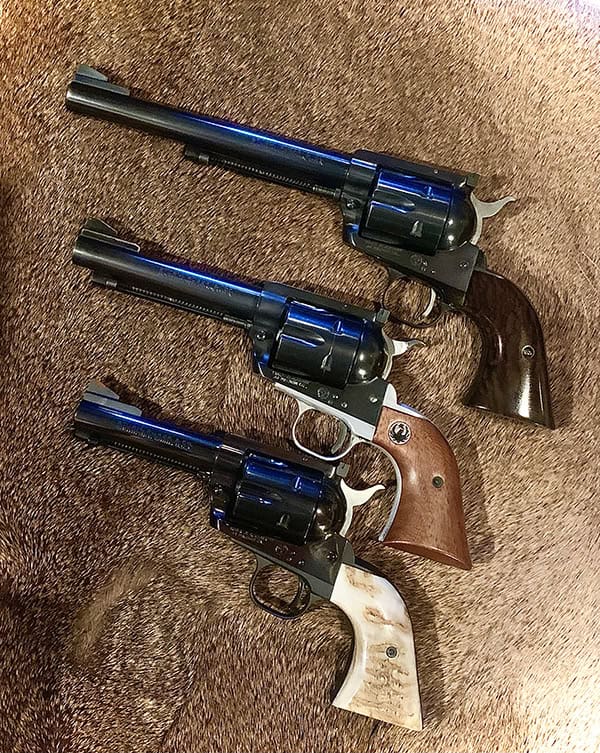
Some 3-screw .44 Mag Blackhawks.
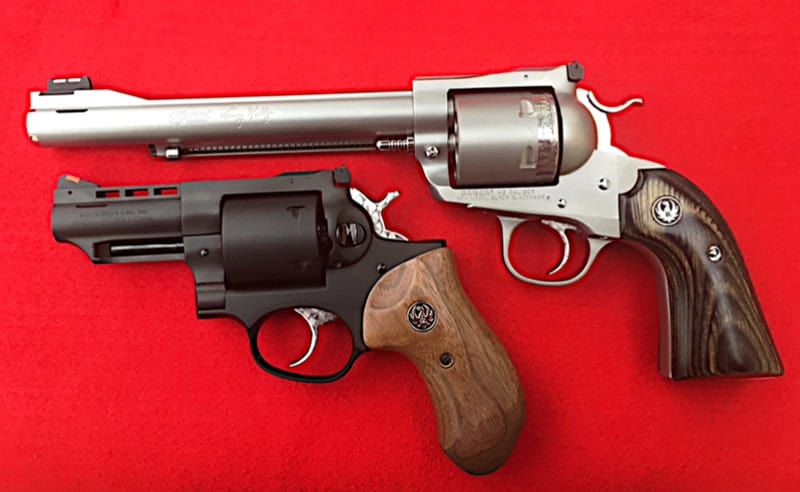
Ken Kelly made these custom .45 Colt and .44 Special for Tank.
Handguns
My first handgun was the one issued to me when I was sworn in as a cop in 1985, beginning my 27+ year career. It was a Ruger Service Six chambered for .38 Special. Already having a good grasp on sight alignment and picture, as well as an educated trigger finger, the transformation from rifle to handgun was easy. The Service Six is a fixed sighted double-action revolver.
My issued gun shot 2” left, at 25 yards. When I mentioned it to an instructor, he tested it. After shooting a cylinder full, he handed the gun back, telling me to hold 2” right, in a matter-of-fact way.
This gun instilled a love of Ruger firearms — and my collection proves it. Several other service and security sixes followed, and then I discovered my weakness — single-action sixguns.
My first single-action was a stainless 7.5” barreled .45 Colt. What followed was a variety of blued and stainless guns, with differing barrel lengths, grip frame styles, and other details, and chambered in several cartridges.
As time passed, custom sixguns were crafted by the likes of Ken Kelly, Bobby Tyler, Brett Pikula and Ronnie Wells.
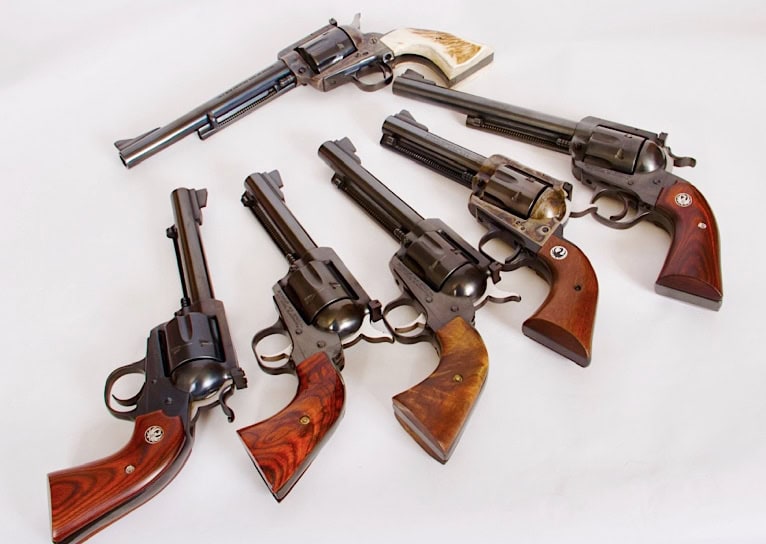
Some factory .44 Specials.
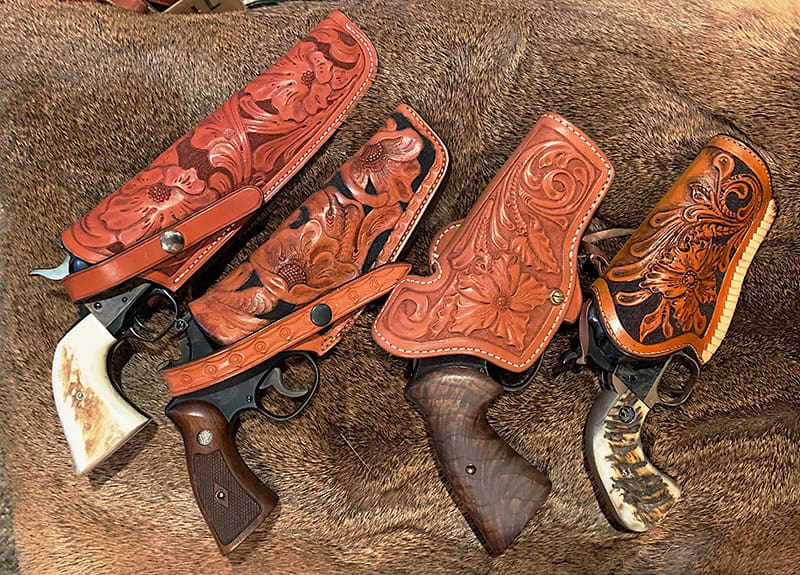
Add good leather to the accumulation pile.
Wrap Up
So, what will the critical thinker’s final analysis be after examining my guns and gear? Overall, I think they’ll say I was a traditionalist who loved big-bore rifles and handguns. Rifle-wise, lever guns and single-shots are the predominant action type. Handguns? Single-action revolvers rule the roost by a long shot, followed by double-action revolvers. Calibers mostly being .357 and up, with most being larger than .44 caliber. There are a lot of .45 Colts.
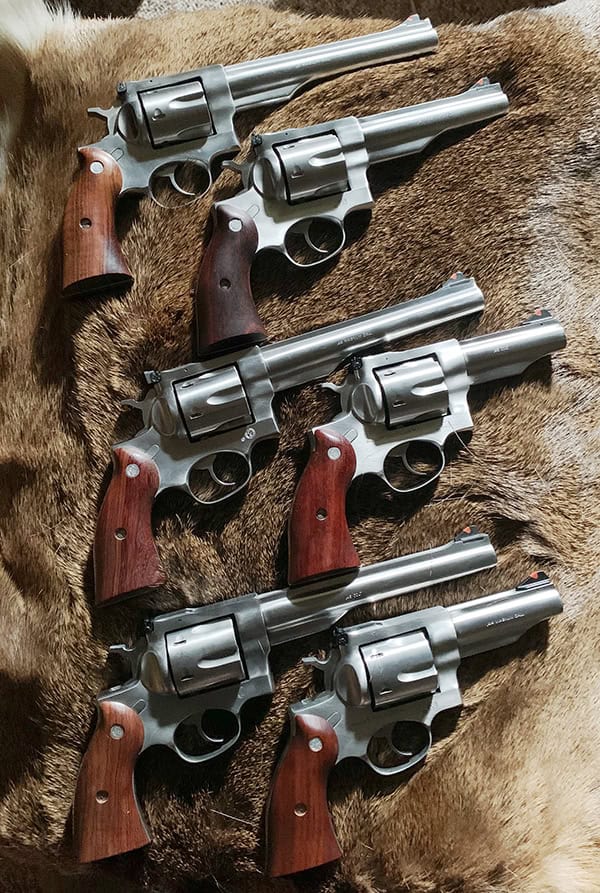
Ruger Redhawks are wonderful sixguns!
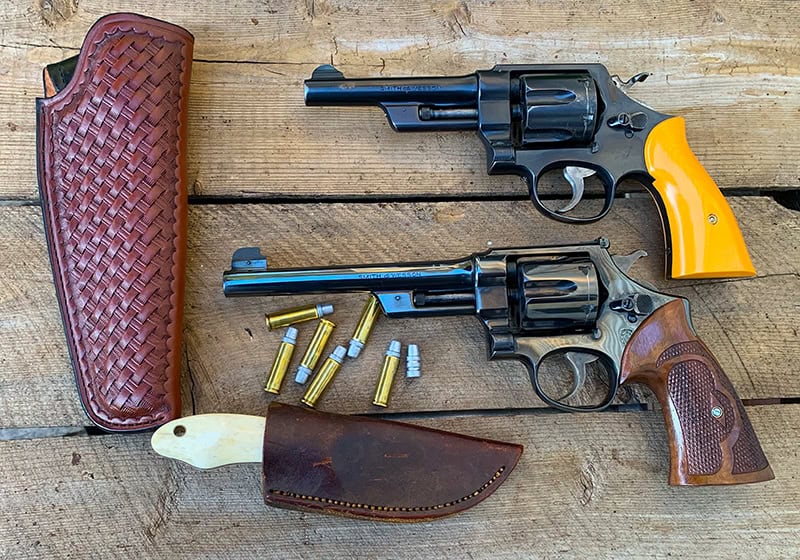
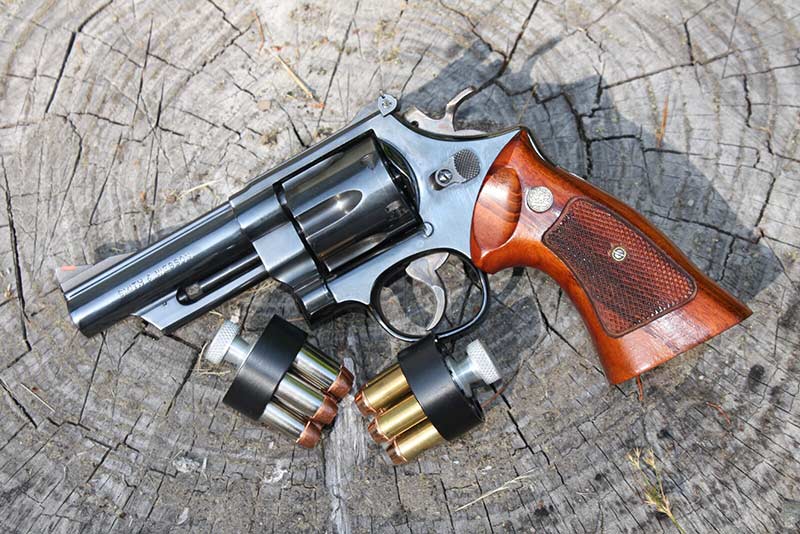
Vintage S&W Heavy Duty and Outdoorsman.
I’d hope the analysis shows I was independent in my handloading and casting, not to mention my supply of components. I’ve barely scratched the surface of the different types of shooters I have, but that’s probably for the best. It would make for a long article and bore most people.
Collecting, or in my case, accumulating, is a secular journey. While one thing leads to another, over time we backtrack, returning to what got us started in the first place. Cause and effect is a wonderful thing! Never stop learning or accumulating what interests you!
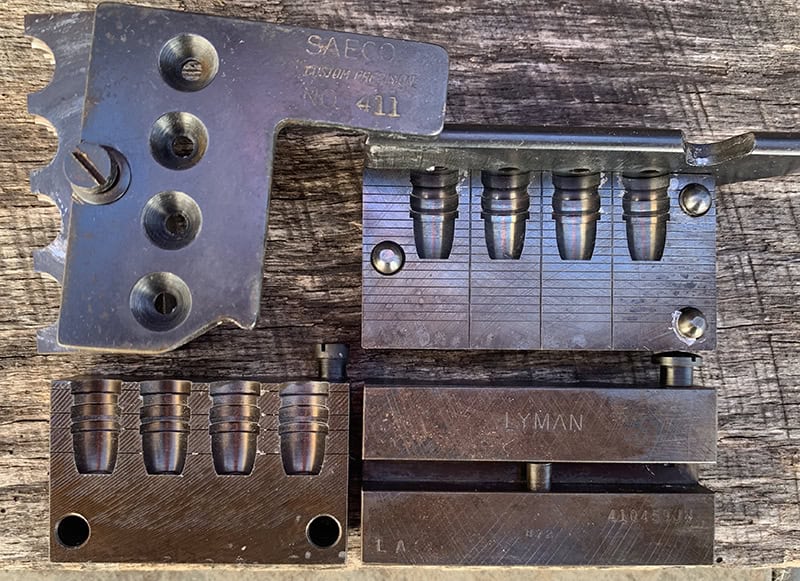
Some .41 caliber molds.
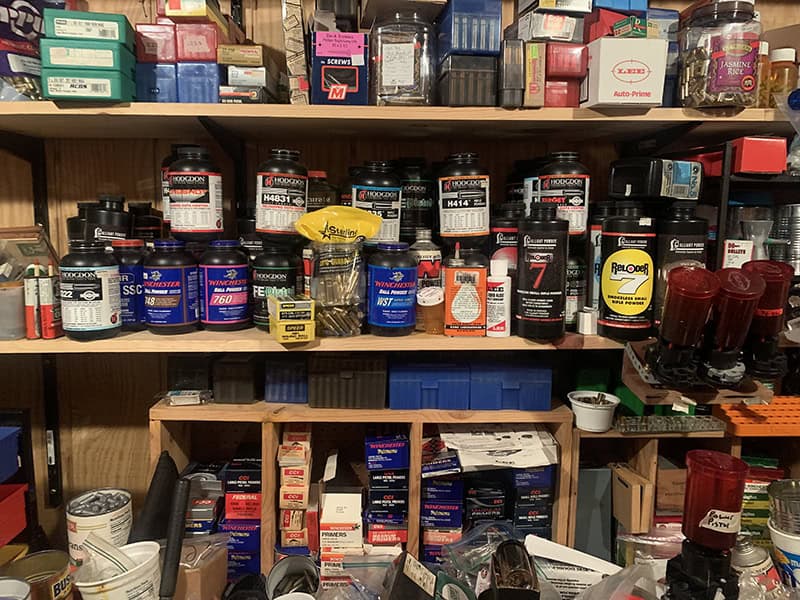
A corner of Tank’s handloading room.
Get more Guncrank content every week!
By submitting this form, you are consenting to receive marketing emails from: . You can revoke your consent to receive emails at any time by using the SafeUnsubscribe® link, found at the bottom of every email. Emails are serviced by Constant Contact