Polymer Praise?
Polymer guns have a place, including firmly in my hand!

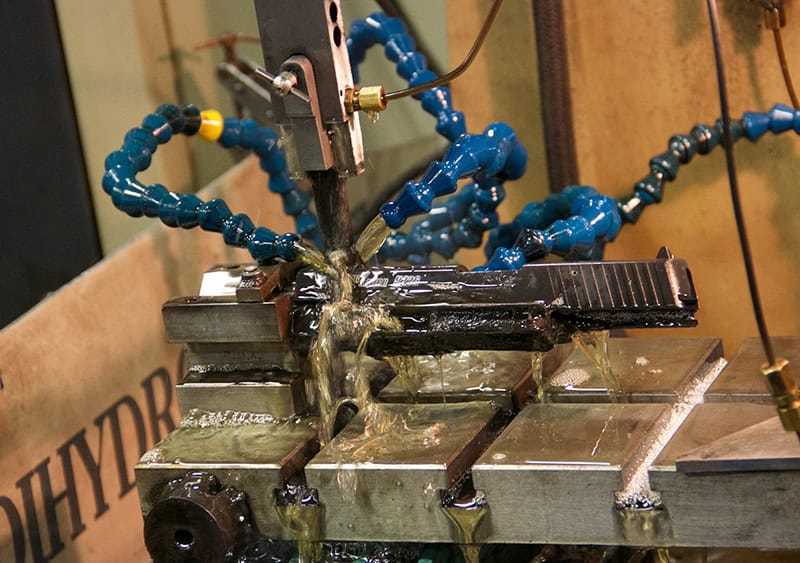
Kuna controls are similar to the AR platform and the clean slab-side
design makes finding buttons in the heat of the moment an easier task.
If you look at comments on many GUNS Magazine Podcast episodes, you’ll find a number of “You’re such a Fudd” and “Why do you hate ARs and Polymer Pistols?” comments. I try to answer many of them, but I’ll use my virtual bully pulpit here to share the 33-1/3 r.p.m. long-playing version of my thoughts (Gen Z’ers will probably need to look that reference up).
First off — yep, both co-host Roy Huntington and I are “Fudds.” If you don’t know what a Fudd is, you’re likely a Boomer. Both of these terms are used derisively by younger people who can’t make a more nuanced argument, so they resort to name-calling. Personally, I’m a big fan of Elmer Fudd from the old Warner Brothers cartoons, so I don’t take offense when the term is used, though much offense is intended. I also love the factthat one commenter said, “Heck yes, you guys are Fudds— ‘Lethal Fudds!’”
That’s a nice way of looking at it, and it falls in line with something I recognized even at a young age — you shouldn’t mess with salty old guys. They might be slow and creaky, but they also don’t get rattled and probably can put a bullet on target very quickly with no hesitation. I wouldn’t take anybody who looks like me into a Tier One door-kicking mission in some sandbox hellhole, but that’s not a legitimate concern for me. My ‘tactical’ problems fall more in line with making sure somebody doesn’t hurt me or my loved ones as the bad guys ply their daily trade of armed robbery and other major felonies. In these scenarios, Fudds are still pretty formidable, so please go ahead and use the term if you like.
And, what younger people also don’t realize is that if someone is old enough to be a Fudd, they’re old enough not to care what they get called — so long as you don’t call us to the Golden Corral dinner buffet after 4:30 p.m.!
Not so fast.
Regarding the mistaken claim, I hate ARs and plastic pistols; it’s just dead wrong. It’s a matter of preference for me whenever we are enjoying the finer side of the shooting world, but I thought I had made the point crystal clear — if there is trouble afoot, I’m most likely to grab an AR, a polymer nine complete with a red dot, or both.
As an aside, some of the comments make me wonder if the tactical bros aren’t just a little too touchy whenever someone appears to throw shade on their “Precious.” Lighten up a bit, eh, fellas?
Anyway, let me state with no wiggle room — I don’t hate black plastic and all the cool tactical toys of the world. But let me explain in detail.
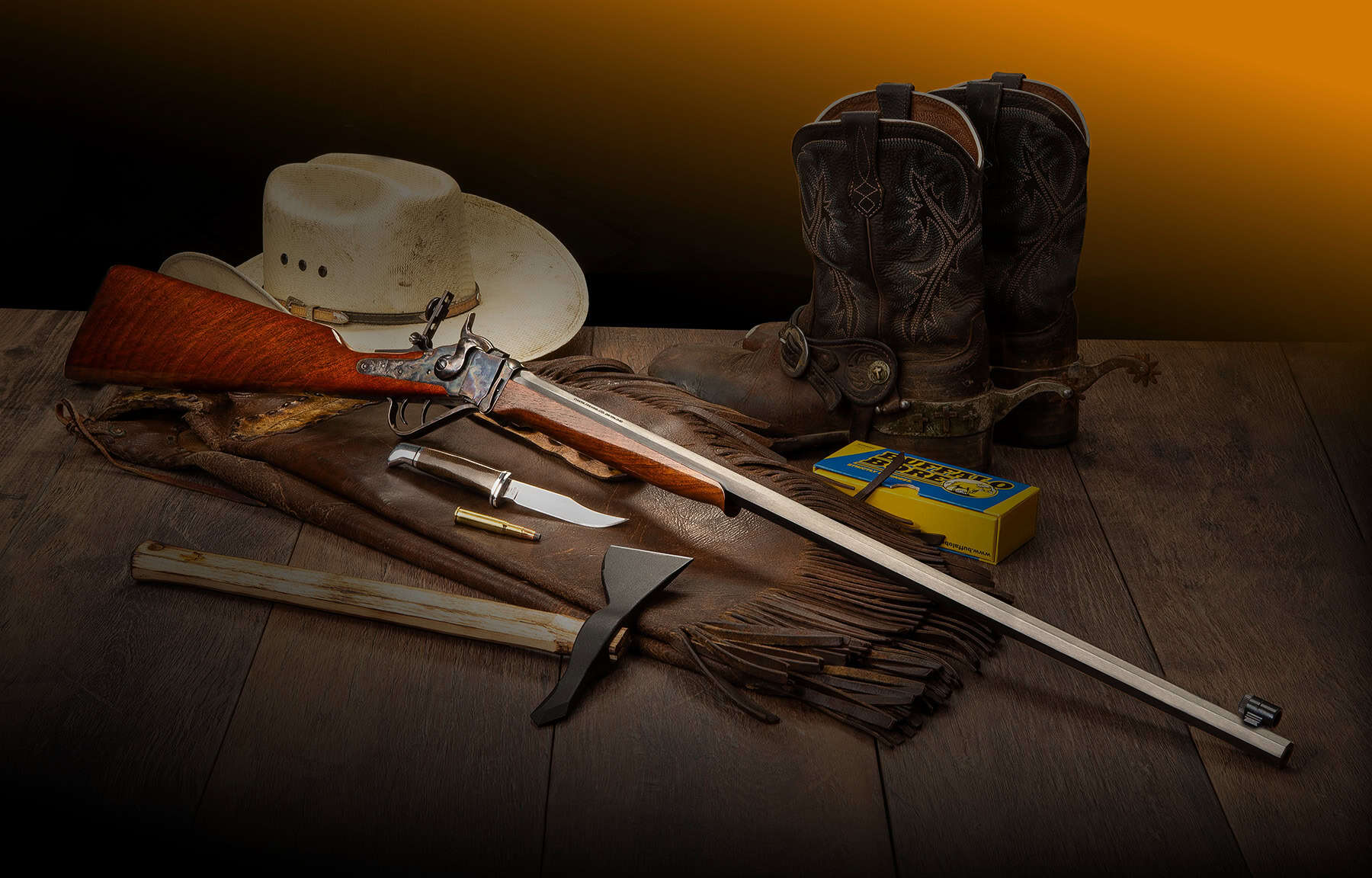
This mini Sharps rifle from Chiappa - our September 2025 cover gun - is a good example of the beauty of fine wood and carefully crafted steel...a true artisan gun!
The Days Gone By
It was a simpler time. A better time, if you ask those of us who still grumble about it. Back in our youth, a gun was what it was supposed to be: steel and wood. You could smell the oiled walnut and feel the cold steel against your cheek. It was honest. It was classic. It was also heavy as a navy anchor and just as prone to rust.
The old dinosaurs, especially we corroded old gun writers, saw the world in blued steel and stained walnut. We’d wax poetic about the “warmth of wood” and the “unrivaled strength of forged steel.” When we saw a new material, we collectively scoffed and called it a toy. We said “plastic” and decried “Tactical Tupperware.” And I’d submit for a while we were right. Early polymer frames were clunky, unproven and ugly as sin.
I remember the first time I saw one in person. It was a GLOCK 17, of course. Blocky, utilitarian, and made of what looked like the same stuff as the proverbial leftover container. The Fudd at the counter looked at it with a sneer and said, “That’s a service pistol,” as if the service pistol declaration was something which excused the aesthetic shortcomings.
“Ain’t no real man’s gun,” he snorted under his breath. But here’s the thing he didn’t consider about real men: they like things that work, and they like things to weigh less than an engine block if they’re going to carry it all day. Polymer did that.
The Rise of the Plastic Fantastic
The H&K VP70 was the first true polymer-frame pistol, released in 1970 and predating the much more commercially successful G17 by 12 years. Both the VP70 and G17 are darn good pistols. Certainly not pretty, but good. They had fewer parts than the competition and didn’t rust. The VP70 was the first time someone had successfully put together a gun with a polymer frame, and it changed everything. Then, the G17 came along and blew the doors off the firearms industry.
It wouldn’t be hyperbole to say it was a seismic shift, a spaceship streaking over the top of a Model T. It was a new idea, a new way of thinking about how guns were made and what they were used for.
Some didn’t get it. They couldn’t understand how guns could be light yet strong and durable, or how this new technology and material could make them so much easier to maintain. The old guard were speaking from a world of fine craftsmanship, of intricate checkering and beautiful bluing but the rest of the world was changing. The military and law enforcement in particular were looking for something different — a pistol to handle a hard daily life, something that could survive significant abuse, could be easily cleaned and maintained, and wouldn’t rust in a humid climate. They wanted the firearms version of an anvil and found it in the GLOCK 17.
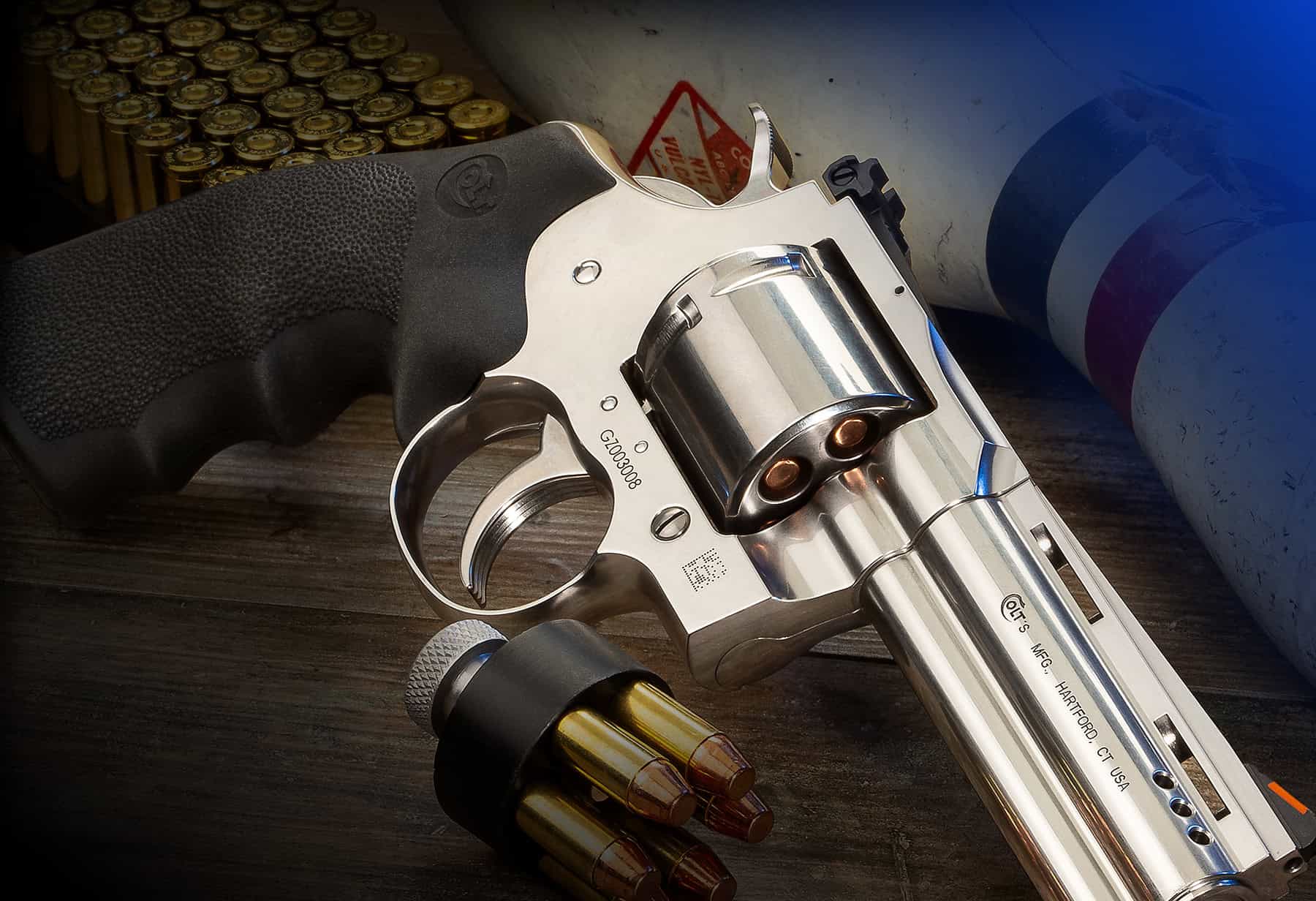
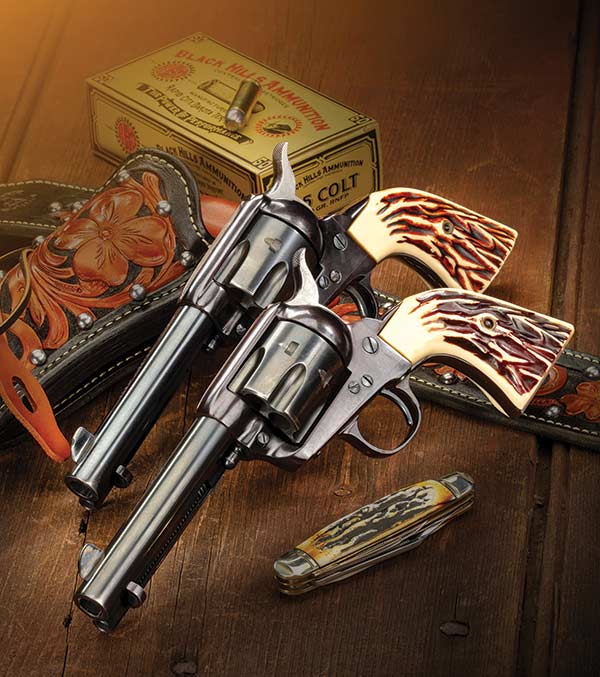
The Colt Grizzly is built using modern methods but retains classic design. However, younger shooters tend to overlook such "Boomer" handguns.
From Ugly Duckling to Beautiful Beast
GLOCK certainly wasn’t the only one. The Walther P99 and VP70 used polymer, but GLOCK truly made it mainstream. The company had good designs, but the relentless focus on savvy marketing made it a standard with law enforcement agencies around the world. Once the cops started using them, the public soon followed. Unfortunately, Fanboys were the next odious step in the chain, but that happens with anything popular.
Regardless, the story of polymer guns isn’t just about the material or new ways to use it — it’s about a shift in culture. It’s about a move away from the “artisan” model of gunmaking and toward a more pragmatic, utilitarian approach. It’s about a recognition that sometimes a tool is just a tool and doesn’t need to be a work of art. It needs to function relentlessly, and that’s what polymer did. It worked. It made guns lighter, more durable and, as a side benefit, more affordable.
The Great Balancing Act
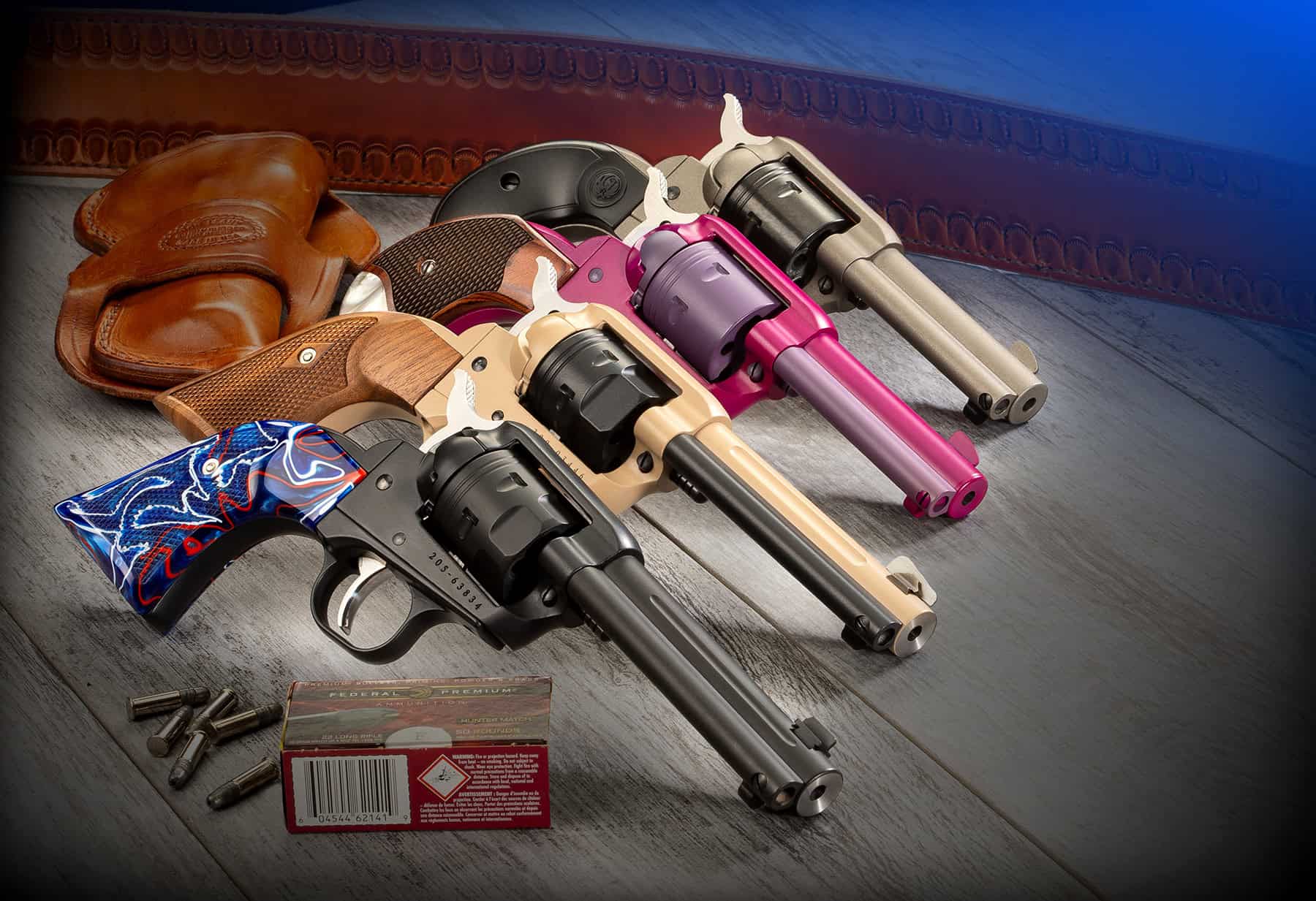
The same platform - here the Ruger Wrangler, a sub-$300 'fun gun - provides a canvas for building a true custom.
Variations of the same platform — here the Ruger Wrangler, a sub-$300 “fun gun” — provides a canvas for building a true custom. While function has beauty, being pleasing to the eye is also a valid consideration when considering guns.
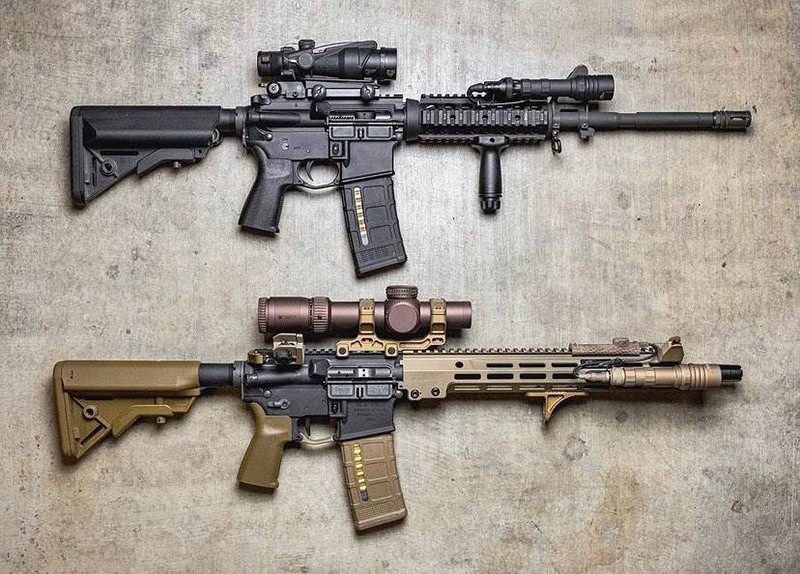
It wasn’t just handguns, either. Rifles got in on the action. The AR-15, in particular, became a platform for polymer innovations. Handguards, stocks, grips and eventually receivers — all these could be successfully made of polymer and yet be light and strong. The AR-15 became known as the Lego toy for grown-ups, an apt comparison built on the endless possibilities of a modular platform made from plastic.
But there was a clear downside of the polymer revolution, the fanboys are loath to acknowledge. With the rise of tactical plastic came a certain sameness. Many modern guns look the same. They’re black, they’re boxy, and they’re made of polymer. The character and soul once found in a finely crafted wood stock or a beautifully blued steel frame is gone.
The New Chapter
Yet, I eventually realized the soul didn’t disappear — it just changed. The beauty of a modern polymer-framed gun isn’t the looks, but based in function. The beauty is in a pistol that can be dropped in the mud, rinsed off, and still fire flawlessly. The beauty is in a reliable rifle that’s light enough to carry all day without complaint. The beauty is in the sheer reliability and durability of a material that was once considered a cheap substitute.
Yet many of us Boomers still grumble. We still prefer blued steel and walnut, and you know what? God bless us, one and all. There’s a place for that. There’s a place for the classic, for the traditional, for the things that remind us of a simpler — or at least different — time. But there’s also a place for the new, for the innovative, for the things that push the boundaries of what a gun can be.

Here, Brent used a new Marlin 336 to take down a big Texas free-range Axis deer. He could have done the same job with an MSR - Modern Sporting Rifle - but the lever gun worked perfectly and elevated the entire hunt to a different plane because of the history and craftsmanship of this decidedly-"Fudd" gun.
Yep, things change. And, while I’ll always have a soft spot for those wood and blued steel classics, I’ll never turn my nose up at a Glock or Springfield or (insert your favorite tactical Tupperware here). It may not be “pretty” to my sensibilities but being honest, there is a different kind of beauty within, the exquisite perfection of function over form.
So I say with all sincerity: shut the front door, “Zoomer” — it’s delulu to think I’m cringe about polymer nines and ARs.
And yes, I needed a Google search in order to write that last sentence. After all, I am a certified Fudd …
Get More GUNS Insider every week!
Subscribe to the newsletter now.
By submitting this form, you are consenting to receive marketing emails from: . You can revoke your consent to receive emails at any time by using the SafeUnsubscribe® link, found at the bottom of every email. Emails are serviced by Constant Contact